
Ghana’s latest political controversy surrounding the arrest and remand of senior nursing officer Salomey Awity Baffoe has quickly moved beyond the courtroom and into the familiar territory of partisan politics. At the centre of the controversy is the anonymous TikTok account known as “Ghana Jollof,” which the police have linked to UK-based Barbara Asantewaa Kodua.
The police allege that Baffoe acted as a liaison for Kodua, recruited people to redistribute videos produced by the account and received money that was subsequently distributed to others involved in circulating the material. Police have also alleged that some of the content concerned matters of national security and included inflammatory claims and threats. Kodua has since been declared wanted.
Baffoe, however, has pleaded not guilty. Her lawyers have challenged both the circumstances of her arrest and the continued detention. One of her lawyers has argued that she was detained beyond the constitutional 48-hour period before being brought before court, while other legal commentators have questioned whether keeping her in custody for two weeks is necessary for the investigation.
Those are legitimate questions. They deserve answers. But legitimate questions about how the law is being selectively applied are not the same thing as a conclusion that the investigation itself is illegitimate. That distinction appears to have become lost in the political noise.
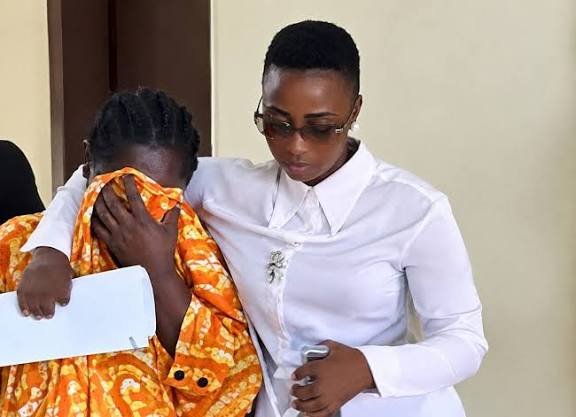
The first point that should not be forgotten is that Salomey Baffoe remains an accused person, not a convicted criminal. The Adentan Circuit Court remanded her for two weeks after she pleaded not guilty to a charge of abetment relating to the alleged publication of false news. The prosecution says investigations are continuing. She is expected back in court on September 30.
Consequently, neither the police's allegations nor the defence's objections should be treated as facts before the evidence is tested through the judicial process. There is, nevertheless, a perfectly legitimate constitutional conversation to have about the manner of arrest, the length of detention and the proportionality of custodial remand.
Article 14(3) of Ghana's Constitution requires an arrested or detained person to be brought before a court within 48 hours or released, subject to the constitutional framework. The Supreme Court has emphasised that the phrase “within 48 hours” means precisely that.
So if the defence establishes that the constitutional requirements were breached, the appropriate response is not political revenge. It is a judicial remedy. That is precisely why Ghana has courts - a statement, “Go to court”, coined and became a mantra by then president in the erstwhile regime.
But where does the NPP's outrage come from? Dr Mahamudu Bawumia has condemned the arrest and called for Baffoe's immediate release, describing the circumstances surrounding her arrest as worrying and accusing the government of selective application of the law. Such intervention is entirely within the realm of democratic political speech.
An opposition party has every right to question the conduct of government and security institutions. But there is a problem when a political party presents a lawful investigation as inherently illegitimate simply because the investigation is politically inconvenient.
The police are not prosecuting Baffoe merely for being a nurse, a mother or a citizen who allegedly knows “Ghana Jollof.” Their stated case is considerably more specific: they allege that she actively assisted the production and distribution network, recruited distributors and handled money connected to the operation.
Whether those allegations are true is for the court to determine. The NPP may challenge the evidence. Its lawyers may challenge the charge. Its politicians may challenge the proportionality of the remand. But declaring the entire exercise an abuse of state power before the evidence has been tested risks turning an important constitutional question into a partisan reflex.
If the NPP and its communicators have forgotten here is the uncomfortable chronicle of political memory and this is where Ghana's political history becomes relevant. The NPP's current concerns about arrests, false-news offences, security agencies and freedom of expression would carry greater moral force if Ghana's political parties had demonstrated consistent principles on these matters irrespective of which party occupied the presidency.
During the previous NPP administration, members and communicators of the then-opposition NDC were themselves arrested or investigated over allegedly false or offensive publications.
In January 2020, for example, Sammy Gyamfi, then NDC National Communications Officer, was arrested by the police in connection with allegations involving possession of forged documents and publication of false news with intent to cause fear and alarm. Police said the arrest was pursuant to a warrant; he was subsequently cautioned and granted bail.
The Presidency at the time defended the investigation, arguing that the matter involved the alleged publication of a forged document purportedly originating from the President's Secretariat and therefore went beyond ordinary political commentary. The NDC, naturally, saw matters differently and described the arrest as unlawful and draconian.
In 2019, NDC-aligned radio presenter Salifu “Mugabe” Maase was prosecuted over allegations including publication of false news and offensive conduct conducive to a breach of the peace. He was granted bail of GH¢50,000 with three sureties.
In 2022, during the NPP administration, Abronye DC, then NPP Bono Regional Chairman, was himself arrested and charged with publication of false news and offensive conduct after making allegations concerning an alleged coup plot involving former President John Mahama.
That history demonstrates something important: the criminal-law provisions concerning allegedly false or inflammatory publications have been used in politically charged circumstances under different governments and against actors associated with different political camps.
It therefore does not automatically follow that their use today is evidence of political persecution. Nor does it follow that every previous use of those provisions was necessarily proper. The consistent democratic principle should be that the same constitutional standards apply regardless of who is being investigated.
The NPP cannot have two constitutional standards and this is the central problem with the present political reaction. When a government is investigating an opponent, the temptation is to call it persecution. When the same legal machinery is used against somebody perceived to be sympathetic to the government, the temptation is to call it law enforcement. Ghana cannot build a durable democracy on that double standard.
If the NPP genuinely believes that Baffoe's constitutional rights have been violated, it should insist on the evidence, demand judicial scrutiny, support her access to counsel, and challenge any unlawful detention before the appropriate court. But it should also be prepared to acknowledge that the state has a legitimate interest in investigating allegations that organised actors are deliberately manufacturing and distributing false information capable of causing public fear, disorder or violence.
That interest does not disappear because the accused person happens to be politically sympathetic to one side. And neither does the citizen's constitutional protection disappear because the person happens to be politically unpopular. Both propositions can be true simultaneously.
There is another uncomfortable irony and the controversy becomes even more striking because the police say the principal person behind the “Ghana Jollof” account is outside Ghana and has been declared wanted. The defence has understandably asked why an individual allegedly connected to someone in the United Kingdom should be kept in custody in Ghana. That is a question worth answering.
But the existence of an alleged principal suspect abroad does not, by itself, establish that a person in Ghana cannot be investigated as an alleged accomplice. If the prosecution can establish that Baffoe knowingly recruited distributors, facilitated the circulation of the material and handled funds connected to the operation, those allegations are legally different from merely being a friend or acquaintance of the person being sought. Conversely, if the prosecution cannot establish those allegations, the court should say so. That is precisely what evidence and judicial proceedings are for.
The principle Ghana needs is consistency. There is a broader lesson here that transcends the NPP and NDC. The NDC should remember how it felt when its communicators and activists faced investigations under the previous administration. The NPP should remember how it defended the authority of the state and its investigative institutions when it was in government. And both parties should understand that today's precedent becomes tomorrow's weapon.
A political party that defends expansive state powers when its opponents are targeted but invokes constitutional liberties when its own supporters are investigated is not defending a principle. It is defending a partisan interest. Ghana needs something better.
The test should not be whether Salomey Baffoe supports the NDC, the NPP or nobody at all. The test should be whether the Police, National Security and the courts have acted within the Constitution and the law. If they have, political parties should allow the investigation to proceed. If they have not, the courts should provide the appropriate remedy. That is how constitutional democracy is supposed to work.
Not every arrest is persecution; not every security investigation is legitimate either. This distinction is especially important in the age of TikTok, Facebook, X, WhatsApp and anonymous digital accounts.
Political actors now possess the ability to disseminate information to hundreds of thousands of people within minutes. That creates extraordinary democratic possibilities, but it also creates extraordinary risks when deliberately fabricated information is circulated as fact.
At the same time, governments possess extraordinary investigative and coercive powers. Those powers can also be abused just as experienced during the erstwhile regime causing their humongous defeat in the 2024 presidential polls. However, the answer to both dangers is the same thing: due process.
For due process, we mean: The police must produce evidence. The accused must have legal representation. The courts must independently scrutinise the prosecution's case. And political parties must stop changing their constitutional principles according to which side of the political divide happens to be under investigation.
The “Ghana Jollof” affair therefore ought not to become another episode in Ghana's endless cycle of “your government did it, therefore it was wrong; our government did it, therefore it was necessary.” The proper question is much simpler: Was the law applied lawfully, fairly and proportionately?
If there was a constitutional breach, let the courts determine it. If there is evidence of criminal conduct, let that evidence be tested in court. But neither the NPP nor the NDC should be permitted to convert the Constitution into a political switch—off when its opponents are in trouble and on when its own supporters are affected just as exemplified by the NPP today.
The NPP simple lack the moral latitude to confront the story just as they are doing to play on the emotional keys of decent citizens. That is the inconsistency Ghana's democracy should be confronting—not merely the identity of the latest person sitting behind the dock




No comments yet. Be the first to comment!