
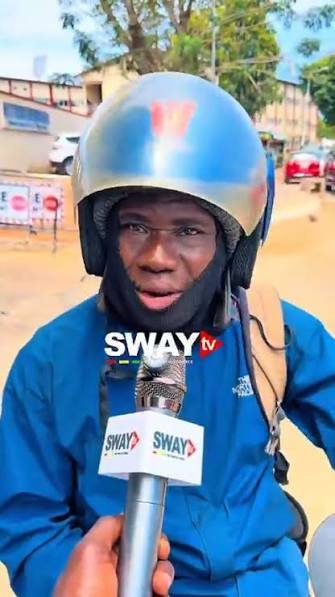
The relationship between an Okada rider (motorcycle taxi operator) and protesting teachers showcases an intriguing conflict of economic views. This dynamic often stems from frustrations regarding low wages in the formal sector compared to the survival strategies found in the informal sector. If an Okada rider were to engage with striking teachers and encourage them to explore alternative economic opportunities like his own, he would likely emphasise the benefits of immediate cash flow, independence, and the challenges of relying solely on a government salary.
However, there is something profoundly disturbing about the image of a professionally trained teacher abandoning the classroom to ride an okada for a living. Not because riding a motorcycle is beneath anyone. It is honest work, and every legitimate occupation deserves dignity. The disturbing part is what the story says about a country that trains teachers, places enormous responsibilities on them, entrusts them with the intellectual and moral formation of its young people, and yet can allow some of them to conclude that the classroom offers less economic security than commercial motorcycle riding.
A video going viral recently vividly shows this frustration. It features a man claiming to be a professionally trained teacher who started in 2016, advising teachers protesting to stop wasting time picketing and to seek alternative ways to earn money, as he has done. Whether every detail of his personal account can independently be verified is less important than the larger question his testimony forces Ghana to confront: What happens to a nation when its teachers begin to regard leaving the classroom as a rational economic decision? That question should concern every government, every political party, every teachers' union and, indeed, every Ghanaian. The teacher cannot be treated as an expendable input.
For decades, Ghanaian political rhetoric has correctly described education as the foundation of national development. Yet there remains a striking disconnect between the rhetoric surrounding teachers and the material conditions under which many of them work. Behind those millions of learners are teachers. They are not merely employees who happen to work in schools. They are the people who convert curricula into knowledge, policy into classroom practice and national aspirations into human capability. If Ghana wants industrialisation, it needs teachers of science, mathematics, technology and technical and vocational subjects. If Ghana wants competent doctors, engineers, lawyers, accountants and scientists, it needs teachers first. If Ghana wants disciplined citizens, productive workers and responsible leaders, it needs teachers.
The teacher therefore sits at the beginning — not the end — of the national production chain. And this is precisely why the condition of the teacher cannot be reduced to the question of whether government has paid a monthly salary. A country serious about industrial transformation must think seriously about the human beings who produce its human capital. Ghana cannot aspire to industrialisation while treating the teacher as a peripheral actor in the development equation.
The okada rider may therefore have exposed a national failure. We should resist the temptation to ridicule the teacher who left the classroom. Perhaps the more uncomfortable question is: Why did the classroom become less attractive to him than the okada? If a trained professional concludes that his academic qualification, professional training and years of classroom experience cannot provide the economic security he needs, the appropriate national response is not simply to condemn him for abandoning teaching.
We should ask what pushed him there. There will always be individuals who leave professions for personal reasons. That is normal. But when the phenomenon becomes sufficiently widespread to generate public debate, it becomes a policy issue. The teacher who leaves is not merely one less employee on a payroll. He represents lost training, lost experience, lost institutional memory, and potentially lost mentorship for hundreds or thousands of children. Teacher attrition has real educational and economic costs.
The 2027 Budget will provide another test in November 2026. It should therefore be treated as more than another fiscal statement. For teachers, it should be a test of priorities. Will government meaningfully address teacher accommodation? Will the deprived-area incentive become a practical reality rather than another policy announcement? Will professional development be adequately financed without creating a revolving door in which one hand pays an allowance while another imposes deductions?
Will teachers receive meaningful support for instructional technology and professional tools? Will remuneration better reflect responsibility and workload? Will promotion and placement delays be eliminated? Will the government and unions create a credible long-term teacher-financing mechanism? Will the teacher be treated as an investment in national productivity rather than merely another expenditure line under compensation of employees?
These are the questions that matter, and there is already evidence that teacher welfare remains a live industrial-relations issue. In September 2026, teacher unions met the Education Minister over delayed promotion placements, with assurances that successful candidates would be placed appropriately by the end of that month. That alone tells us something important: the welfare crisis is not merely about salary. It also concerns career progression, administrative justice and professional dignity.
A teacher's dignity cannot be measured only in cedis. The central problem is therefore not simply that Ghanaian teachers are underpaid, though it is, but it is that the country has not yet constructed a comprehensive social and economic architecture around the teaching profession. A serious teacher-welfare policy should include at least the following: Competitive and predictable remuneration linked to the realities of inflation and living costs. Effective deprived-area incentives for teachers who accept difficult postings. Duty-post accommodation, particularly in rural and hard-to-reach communities. Adequate transport and mobility support where teachers are required to travel in the course of their work. Employer-provided professional tools and equipment, especially digital teaching infrastructure.
The rest are: a transparent promotion system with published timelines and enforceable deadlines. A sustainable teacher financial institution or cooperative fund providing affordable credit and investment opportunities (The Teachers' Bank). Stronger retirement planning and housing support so that teachers do not leave the profession after decades of service with little accumulated wealth. Protection against workplace violence, particularly in schools where teachers and students face serious disciplinary and security challenges. And greater accountability from teacher unions, including transparent reporting on dues, welfare funds, negotiations and outcomes.
This is not a partisan issue because the greatest danger would be to turn teacher welfare into another NDC-versus-NPP contest. Governments have changed. Ministers have changed. Parliamentarians have changed. Political slogans have changed. But the teacher remains in the classroom. The child remains in the classroom. And the fundamental question remains unresolved: How much is Ghana genuinely prepared to invest in the people who manufacture the country's most important resource — its human capital?
The teacher's plight cannot be solved by applause on Teachers' Day. It cannot be solved by describing teaching as a "noble profession." Nobility does not pay rent. Nobility does not buy textbooks. Nobility does not finance transportation to a deprived community. Nobility does not protect a teacher from violence. Nobility does not build a retirement home. And nobility alone does not keep a trained teacher in the classroom (so key).
The time for a democratic statement is here and now. Perhaps, therefore, the viral Okada rider has inadvertently offered Ghanaian teachers something more valuable than an insult. He has offered a mirror. The mirror asks whether teaching still represents a rational economic choice for the Ghanaian professional. It asks whether teacher unions are sufficiently powerful and sufficiently accountable. It asks whether governments understand that education is not merely a social service but the production line for every other sector of the economy. And it asks teachers themselves whether they are prepared to demand a fundamentally different social contract.
The forthcoming 2027 Budget will offer another opportunity as a litmus test to answer these questions. But teachers should not wait until November to discover what government thinks about them. They should begin asking now. Because a nation that neglects its teachers eventually pays the price — not merely through disgruntled workers, but through weaker schools, poorer learning outcomes, reduced productivity and diminished national capacity.
The teacher is not an expendable cost centre. The teacher is the architect of the human capital upon which every Ghanaian development ambition ultimately depends. If Ghana genuinely wants to build an industrial, technologically capable and economically independent nation, then it must first make the profession that builds its people worth staying in.
Otherwise, the most painful irony of our educational system may be this: We will continue teaching our children that education is the pathway to a better life while the people doing the teaching increasingly discover that leaving the classroom may be their own pathway to one. That is not merely a teacher-welfare problem. It is a national development problem.




Norbert Bawa
Sep 8, 2026 7:53 pmMy brother you've said it all however, the teacher unions should take much of the blame. If a union leader can accept an appointment from a politician, what do you expect? How will such a personality fight for the people leads when his mouth is full? The best these unions can do is to trade their members for their personal and selfish gains.