
Every year, the devastating floods in Accra dominate national headlines. Lives are lost, homes are destroyed, businesses collapse, and public officials arrive afterwards with sympathy statements and promises of reform. Yet, once the waters recede, the urgency often fades—and the cycle repeats.
The worrying question now is whether the Wa Metropolis is quietly heading down the same dangerous path.
Across the Wa Metropolis, residents are increasingly raising concerns about what they describe as the unchecked rise of unauthorised structures, particularly those they believe have been built on natural waterways. Their fear is simple but serious: if nothing is done, Wa could soon face preventable flooding disasters on a similar scale.
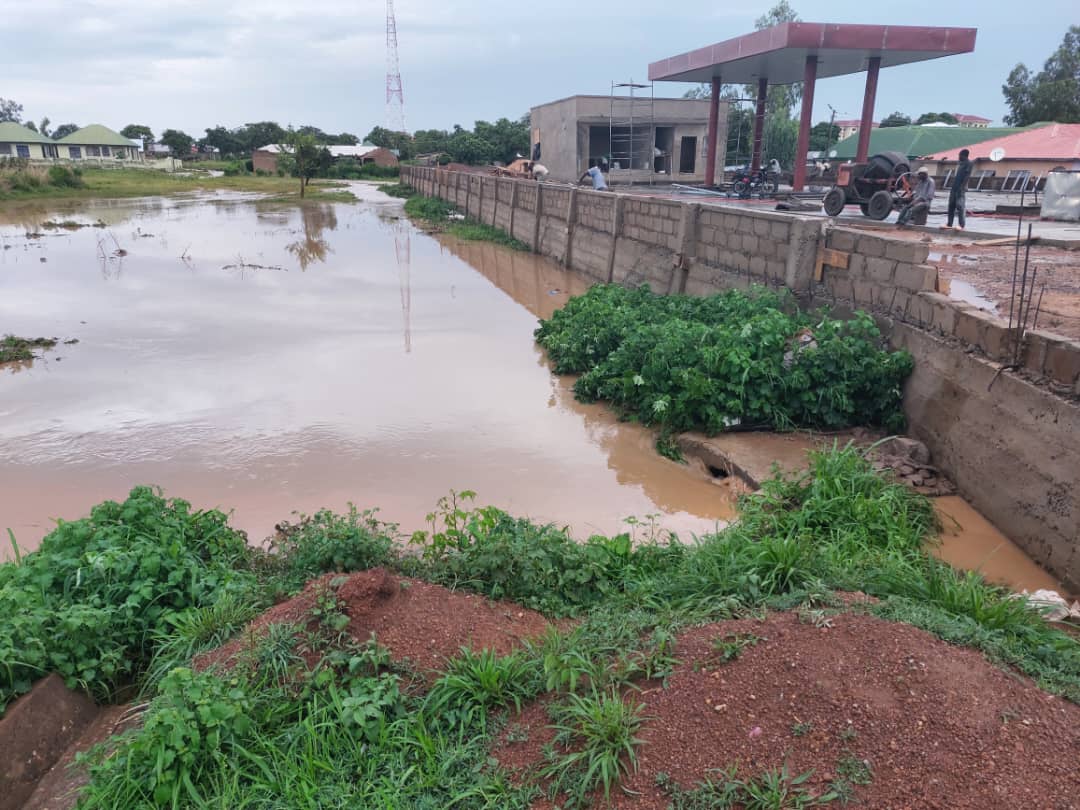
At the centre of growing public concern is the EZA Filling Station located along the Wa–Hamile Highway near the Regional Hospital.
Residents consistently maintain that the area where the filling station now stands previously served as a natural watercourse, allowing stormwater to flow freely during heavy rainfall. According to their accounts, the land played a crucial role in draining excess rainwater away from surrounding homes.
From the beginning of the construction, residents say concerns were repeatedly raised with the relevant authorities. They recall warning that siting such a major commercial structure on a suspected waterway could obstruct natural drainage and expose nearby homes to flooding risks. However, according to these residents, the project continued until completion without any visible intervention.
Today, many residents believe those warnings are being confirmed by experience. They report that since the construction of the filling station, the free passage of stormwater in the area has been significantly restricted. As a result, they say, water now accumulates and overflows into nearby homes whenever there is heavy rainfall.
One incident earlier this year remains deeply troubling to the residents. Following a heavy downpour, floodwaters reportedly overwhelmed parts of the surrounding homes. A retired couple was said to have been trapped inside their home. The husband, who is confined to a wheelchair, was unable to escape rising waters without assistance. According to residents, good Samaritans had to intervene urgently to rescue them. Many in the area describe this incident as a clear warning sign that was not adequately acted upon.
Despite repeated petitions and continued media attention, residents say they have not seen meaningful steps taken to address the situation. This ongoing inaction, they argue, continues to put lives and property at risk.
Some residents further express the perception that the owner of the filling station may have strong political connections, which they believe could be contributing to the lack of enforcement action. While this remains a perception among sections of the public, they argue that the silence of the authorities has only deepened suspicion and weakened confidence in institutions responsible for development control and environmental protection.
However, concerns extend beyond a single structure. Residents believe the EZA Filling Station may be one of several developments within the Wa Metropolis that have been erected on or near waterways. They fear that if such trends are not urgently addressed, the metropolis could face increasingly severe flooding incidents in the future as natural drainage routes continue to be obstructed.
These concerns have led residents to ask difficult but necessary questions. Must people die before action is taken? Must families lose their homes and livelihoods before enforcement begins? Must a preventable disaster occur before the authorities decide to act with urgency? These questions reflect growing frustration among residents who feel their warnings are not being taken seriously.
There is also a broader concern among residents about what they perceive as a reactive culture of governance—one that responds strongly after disasters but struggles to act decisively before them. In their view, flooding responses often come too late, after lives have already been lost and property destroyed. Residents of the Wa Metropolis insist that prevention must take precedence over reaction.
They are calling on the relevant institutions responsible for physical planning, environmental protection, and law enforcement to urgently investigate concerns surrounding developments on waterways. Where violations are identified, they expect the law to be applied fairly, consistently, and without fear or favour.
At the same time, residents acknowledge their own responsibility in safeguarding their homes. They are urging one another to remain vigilant and to report any developments that appear to obstruct waterways or threaten natural drainage systems. In their view, silence in the face of such risks only increases vulnerability.
Wa Metropolis still has an opportunity to avoid the devastating flood disasters that have become all too familiar elsewhere. But that opportunity is narrowing with every rainy season that passes without decisive action.
The question remains stark and unavoidable: will the authorities act in time to prevent disaster, or will they wait until the waters rise, homes are destroyed, and lives are lost before responding? History will not forget the answer.
The Trial News.







Wilfred Sunkyedong
Jul 1, 2026 11:34 amGreat piece as usual.