
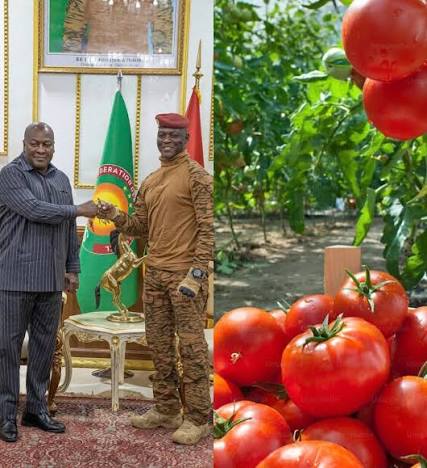
The import of Trump's undisputed comment that Africa is a shithole is coterminous with Traoré's ban on tomato exports from Burkina Faso. The two serve a clarion call for all African nations to be self-dependent in this age. This call for self-reliance emphasises the importance of fostering local industries and sustainable practices. By taking charge of their own resources and economies, African countries can build resilience against external criticisms and market fluctuations.
Nonetheless, this situation underscores the complex interplay between political rhetoric and economic policies, highlighting how statements can influence perceptions and actions on the ground. As countries navigate their international relations, the repercussions of such comments often extend beyond mere words, affecting trade and diplomatic ties that are not the foremost things to concern ourselves with as a sovereign nation.
Mali, Burkina Faso, and Niger—the three Sahelian states—rebelled against France, their slave owner. It was anticipated by astute observers that the ECOWAS bloc would unite in favour of their second coming of independence, but what did we do? Instead, because they cannot fathom severing ties with their slave masters, member states spat on the three states' move. Much as this reaction underscores a complex relationship between former colonies and their historical oppressions, it reveals deep-seated dependencies that hinder true sovereignty by African states, which give meaning to Trump's shithole comment.
As these Sahelian nations push for autonomy, the challenge is to overcome not only external pressures but also internal ECOWAS divisions. Ghana must see Burkina Faso's decision to ban tomato exports, on which they rely heavily despite their abundant arable land, as a wake-up call to fully realise the independence gained on March 6, 1957.
When Nkrumah won independence for the Gold Coast, now Ghana, he did so with good intentions. During his reign as the first president, Ghana never imported tomatoes, and the Pwalugu tomato factory relied entirely on locally grown tomatoes. So, if Traoré made the decision to ban tomato exports in order to have enough raw tomatoes to feed his tomato factory, what lessons can we draw from this? Think!
One key lesson is the importance of self-sufficiency in agricultural production, which can bolster local economies and reduce reliance on imports. Additionally, it highlights the potential consequences of policy decisions on both local industries and international trade dynamics, underscoring the need for balanced approaches that consider long-term sustainability. This is by way of pricking the conscience of Ghana to see the reasons that its independence is indeed useless, as echoed by Osagyefo Dr Kwame Nkrumah on Independence Day.
Imagine the ECOWAS bloc's buffoonery and ineptitude. Since Niger forcibly broke away from the French, the EU Parliament has become aware of the enormous impact Niger has on their local economies. As a result, the people of Niger, who are our people, will be forced into perpetual servitude again. Similar to Iran, Niger will soon be attacked, and don't be shocked if Ghana and other member states of ECOWAS use their territory as military bases for the slave masters to attack Burkina Faso, Mali, and Niger. It's only a matter of time, so be careful.
The consequences are dire, and the implications of such military actions, in particular, could destabilise the entire ECOWAS region, leading to a humanitarian crisis that would affect millions, including Ghana. The African international community must act swiftly to prevent looming escalation and support diplomatic solutions that prioritise the welfare of the affected populations. What Africans are asking for is simply common respect in trade and decision-making at all stages of international bodies and interrelationships.






No comments yet. Be the first to comment!