
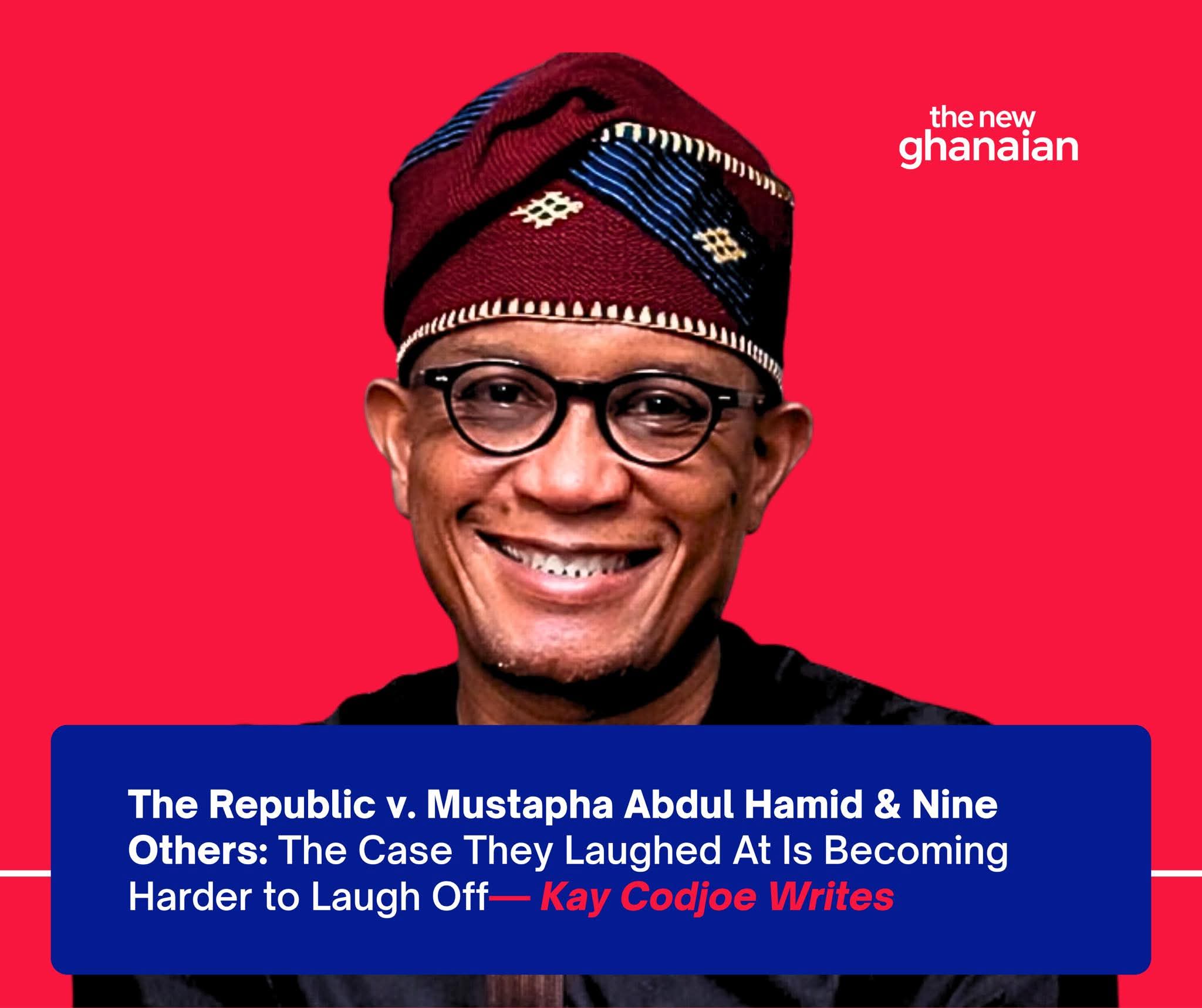
Walahi, there is something all too familiar about the way Ghanaians react when corruption allegations touch the powerful. At the beginning, there is confidence. The accused sounds relaxed. The defenders sound even more relaxed. Supporters go on radio and social media to assure everybody that the case is weak, political, empty, or "useless". The assumption is simple: this too will pass. The country will talk, grow tired, and move on. That is why the case of Mustapha Hamid has become so interesting.
As of 10 March 2026, The Republic versus Mustapha Hamid & Others has not ended. There is no conviction. There is no acquittal. The matter remains before the High Court. But something significant has shifted. Albert Ankrah, the fourth accused, has approached the Office of the Special Prosecutor seeking a plea arrangement and offering to cooperate. The court has adjourned the matter to 24 March 2026 for the appropriate processes to be filed. Until those processes are formally presented and adopted, no charges have been withdrawn. Still, the development matters. It could alter the direction of the entire case.
For months, the prosecution has leaned heavily on documents, bank records, corporate links, and asset tracing. That is how complex financial crime cases are built. But when an insider signals willingness to admit wrongdoing and cooperate, the case changes character. It moves from reconstruction to narration. It becomes about who authorised what, who benefited, and how the system functioned from the inside. That is where discomfort begins.
The case started with investigations in late 2024 into alleged unlawful dealings at the National Petroleum Authority. The allegation is that between 2022 and December 2024, Mustapha Abdul Hamid, Jacob Kwamina Amuah, and Wendy Newman used their positions to operate an extortion scheme that collected GH¢291,574,087.19 and US$332,407.47 from oil marketing companies and bulk oil transporters. Those figures are not abstract. They sit in a sector that affects fuel prices, transport fares, and the daily cost of living. When regulators are accused of turning regulation into leverage, it strikes at trust.
The accused persons originally included Mustapha Abdul Hamid, Jacob Kwamina Amuah, Wendy Newman, Albert Ankrah, Isaac Mensah, Bright Bediako Mensah, Kwaku Aboagye Acquaah, and the companies Propnest Ltd, Kel Logistics Ltd, and Kings Energy Ltd. The charges now stand at 54, covering extortion, conspiracy, abuse of public office for profit, and money laundering.
The case first appeared in court in July 2025 as a 25-count matter involving about GH¢280.51 million. By October 2025, the charges expanded to 54 after what the prosecution described as new evidence. By December, the alleged sum had increased. The OSP also reported seizing and freezing assets exceeding GH¢100 million and US$100,000.
There is also a quieter track running alongside the criminal charges: ongoing financial investigations into assets personally linked to Mustapha Abdul Hamid. One property he reportedly says was a gift from former President Nana Addo Dankwa Akufo-Addo is under scrutiny. Where assets are not declared in mandatory forms filed with the Audit Service, the law allows the state to seek freezing or forfeiture pending trial. That process is separate from the criminal counts but connected to the same question of accountability.
This is why the early dismissal of the case felt premature. Mustapha Abdul Hamid reportedly filed an application in December 2025 to strike out the 54 charges. Public reporting confirms the filing, but there has been no clear reported ruling on its merits. The case remains active.
The development involving Albert Ankrah therefore matters. A cooperating insider does not automatically secure convictions. Testimony must be tested. Motives will be examined. Credibility will be challenged. The defence will respond. Courts do not convict on headlines. But one reality is hard to ignore: this is not the same case it was months ago. It has deepened.
For years, Ghana has watched high-profile corruption allegations begin loudly and end quietly. Cases slow down. Public attention shifts. The urgency fades. That history has conditioned many to treat prosecutions as temporary storms.
Perhaps this one is different, and the culture of laughing first and answering later is meeting resistance. That is why 24 March 2026 matters. Not because it will produce a final judgement, but because it may confirm that this prosecution is moving forward rather than dissolving.
The courts will determine guilt. They must. But the public is entitled to notice when a case once mocked as weak begins to gather something powerful: testimony from inside the room.


No comments yet. Be the first to comment!