
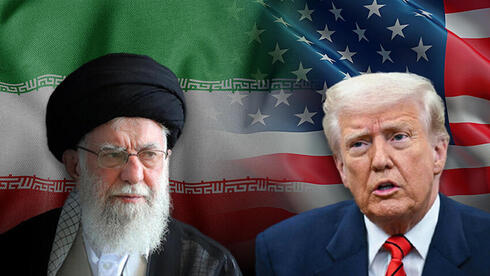
Baghdad was once the focus of a series of US attacks that resulted in the capture and execution of Saddam Hussein, Iraq's leader. All of Iraq's neighbours washed their hands and personally absolved themselves of the quagmire in which the country found itself. After all, no nation has a hand in the situation Baghdad found itself in. That priceless solidarity was conspicuously absent, and some Arab nations in the Middle East rallied in support of the United States, and Baghdad has never been the same since.
Hitherto, Iraq was complicit in the asserted narrative, and today the table has turned. It is a promise never to fail because almost all Middle Eastern nations will, one by one, suffer the same berated fate as Baghdad, as is currently the case with Tehran, and it is only a matter of time.
The USA may have their blame for their unilateral invasions, which spurn international treaties or laws, but I am interested in blaming leaders of this region for not being there for one another in such trying times. If any of the region's leaders are unable to reminisce about the debacles in Baghdad during and after the US invasion and see compelling and cogent reasons to stand up for one another as neighbours in that rich region, the rest will follow suit one by one.
The situation in Iraq since the death of Saddam Hussein has been complicated, and all can appreciate that very well. The US-led invasion created significant instability, and the region's dynamics have been reshaped, never to return to the good old days. The challenges faced by Iraq and its neighbours have led to a reevaluation of alliances and strategies in the Middle East. As nations grapple with the consequences of conflict, a renewed emphasis on cooperation and understanding may offer a path toward lasting peace and stability.
Yesterday, Iraq got its fair share, and next today is Iran, and the domino effect is undoubtedly going to be sustainable and link up with every Middle Eastern nation as time goes on. This by far is not an endorsement of the very things the leadership of Iran was called out for: refraining from harsh governance and respecting the citizens with good governance. If responsibility were to be exuded, it should have been the total leadership of the Middle East nations that would have taken charge of Iran to respect its citizens for good governance, but here we are.
Nonetheless, the consequences of Iran's actions we witness today could resonate throughout the region, prompting other nations to re-evaluate their own governance and treatment of their populations. A unified call for respect and accountability might inspire a new wave of reform, fostering greater stability and cooperation among neighbouring countries.





Dr Abu Kalaa Abraham
Mar 1, 2026 12:02 pmThat's a nice piece and well noted. Regards