
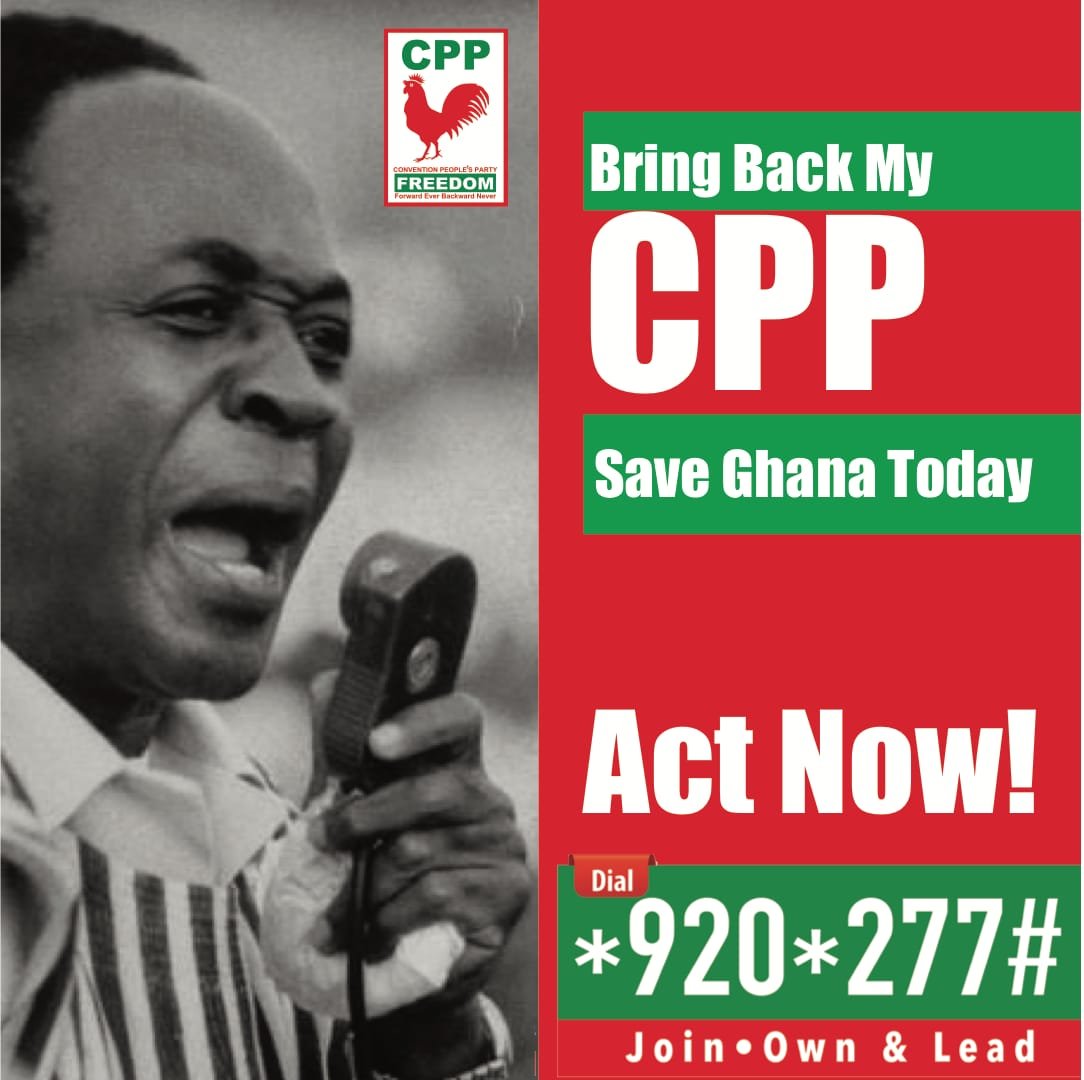
The recent brouhaha surrounding discussions about removing the images of the Big Six from Ghana's currency notes has reignited an important national debate about their respective contributions to the country's independence struggle. The controversy has also raised a fundamental historical question: Did all six members of the Big Six make significant contributions towards Ghana's independence, or was Kwame Nkrumah the only figure whose efforts truly secured the country's freedom from British colonial rule? While opinions differ, this debate offers an opportunity to examine our history objectively, beyond political loyalties and partisan interpretations.
In my considered opinion, Kwame Nkrumah deserves the greatest individual credit for Ghana's attainment of independence on 6 March 1957. However, recognising his monumental contribution must not excuse erasing the efforts of those who initiated earlier nationalist movements or the sacrifices of ex-servicemen whose actions helped awaken the country to the urgency of political freedom.
Ghana's independence struggle did not begin with Nkrumah, nor did it begin with the formation of the United Gold Coast Convention (UGCC) in 1947. The roots of organised nationalism go much further back. Movements such as the Fante Confederation, the Aborigines' Rights Protection Society, the National Congress of British West Africa and the Gold Coast Youth Conference had, at different stages, challenged aspects of colonial administration and demanded greater African participation in governance. These organisations helped establish the political consciousness and nationalist traditions upon which subsequent movements would build.
The formation of the UGCC in August 1947 represented another significant development in this historical journey. Led by prominent nationalists, including Dr J.B. Danquah, George Alfred Grant, popularly known as Paa Grant, and others, the organisation demanded self-government for the Gold Coast. It was within this political environment that Kwame Nkrumah was invited to return from Britain to serve as its General Secretary.
The contributions of the early nationalists, particularly the five other members of the Big Six, therefore deserve recognition. Danquah provided intellectual and political direction to the UGCC. Ebenezer Ako-Adjei played an important role in facilitating Nkrumah's return to Ghana. Edward Akufo-Addo, Emmanuel Obetsebi-Lamptey and William Ofori Atta were also involved in the early nationalist agitation. Their contributions may not have matched Nkrumah's eventual achievements, but they were part of the foundations of the struggle.
We must also never overlook the ex-servicemen, whose role in the independence story is particularly significant. Having fought for Britain during the Second World War, many returned home expecting their sacrifices to be recognised through the payment of their promised gratuities, better living conditions and improved treatment. Instead, they encountered economic hardship, neglect and colonial indifference.
On 28 February 1948, the ex-servicemen marched towards Christiansborg Castle in Accra to present a petition to the colonial authorities. The shooting and killing of three veterans, Sergeant Cornelius Frederick Adjetey, Corporal Attipoe and Private Odartey Lamptey, by colonial police triggered widespread disturbances. The events that followed became a major turning point in the country's nationalist agitation. Their courage and sacrifice must never be reduced to a footnote in Ghana's independence history.
However, while the early nationalists established the foundations and the ex-servicemen helped intensify the agitation against colonial rule, Kwame Nkrumah took the struggle to a different level.
After breaking away from the UGCC in 1949, Nkrumah established the Convention People's Party (CPP) with the demand for self-government now. Unlike the more gradual constitutional approach favoured by the UGCC leadership, Nkrumah pursued a more radical, mass-based political campaign. Through Positive Action, strikes, demonstrations and civil disobedience, he mobilised ordinary Ghanaians into a formidable political force against colonial rule.
His imprisonment in 1950 did not extinguish the movement. Instead, the CPP went into the 1951 elections and won 34 of the 38 contested seats. Nkrumah himself won the Accra Central constituency while still in prison. His subsequent release and appointment as Leader of Government Business marked a decisive moment in the country's journey towards independence.
The CPP's subsequent electoral victories and Nkrumah's political leadership eventually brought the Gold Coast to independence in 1957. It is difficult to identify another individual whose contribution to the decisive final phase of this struggle was as consequential as his.
This is why attempts to place all the nationalist leaders on the same historical pedestal do not do justice to the facts. Contributions can be acknowledged without pretending that they were equal. The people who laid the foundations of a movement deserve recognition, but the person who transformed that movement into a powerful mass campaign and led the decisive political battle also deserves his rightful place in history.
Indeed, it is reasonable to argue that without the earlier nationalist movements, the activities of the ex-servicemen and the political awakening that preceded Nkrumah's emergence, Ghana's independence might still have come, but perhaps not as early as it did. We cannot establish precisely how much longer colonial rule would have lasted, but the historical foundations and momentum created by these earlier actors mattered.
Ghana must therefore resist the temptation to rewrite its history to satisfy contemporary political loyalties. Those who belong to the Danquah-Busia tradition should not exaggerate the contributions of the UGCC to diminish Nkrumah. Equally, Nkrumahists should not dismiss the contributions of the other nationalists simply because they eventually disagreed with the Osagyefo over the methods and pace of achieving independence.
Our history is richer than partisan interpretations suggest. Nkrumah deserves the greatest individual credit for Ghana's independence, but the other nationalists and the ex-servicemen deserve their rightful recognition for helping to make that achievement possible.
The debate over the images on our currency notes should therefore not become an excuse to erase history or elevate political personalities beyond their actual contributions. If the images of the Big Six are to be retained, removed or reconsidered, such a decision should be informed by historical evidence and a clear national understanding of their respective roles, not by political hostility or selective remembrance.
The truth is that Nkrumah did not start the entire independence struggle, but he became its most consequential leader and the principal architect of its successful conclusion. Ghana must celebrate him without forgetting those who helped prepare the ground.
That is not a compromise between competing political traditions. It is an honest acknowledgement of our history.
The Trial News
No comments yet. Be the first to comment!