
(REMEMBER TO PRAY IN THIS MONTH OF NOVEMBER FOR YOUR RELATIVES, LOVED ONES AND FRIENDS WHO HAVE DIED).
COLLECT: “O GOD, BY WHOSE GIFT SAINT ELIZABETH OF HUNGARY RECOGNIZED AND RECEIVED CHRIST IN THE POOR, GRANT, THROUGH HER INTERCESSION, THAT WE MAY SERVE WITH UNFAILING CHARITY THE NEEDY AND THOSE AFFLICTED. THROUGH OUR LORD JESUS CHRIST, YOUR SON, WHO LIVES AND REIGNS WITH YOU IN THE UNITY OF THE HOLY SPIRIT, GOD, FOR EVER AND EVER. AMEN”.
Rev. 3:1-6,14-22; Ps 14:2-5 and Lk 19:1-10.
Saint Elizabeth, whom we celebrate today, married Ludwig IV of Thuringia at 14. For the intense Elizabeth, it was a happy marriage. The family tried to follow Francis of Assisi's ideal. As Elizabeth was expecting their third child, Ludwig died in the Crusades. Elizabeth became a Franciscan tertiary, founded a hospital in honour of Saint Francis, and dedicated herself totally to the care of the poor. She was only 24 years old when she died. She is the Patroness of the Franciscan Third Order and of Catholic Charities.
There is a very popular expression that, “When you fall, you should not lie there and ask for a pillow to support your head” (Lit. “Ka foo wa le, ta gang be kye yeli ka ba de kapuri/zukograa wa ko fo ka fo kogi fo zu”). The meaning of this expression is that, when you know your weakness(s), you should do something about it to get out of it. We can apply this to Zacchaeus in the Gospel we reflect on today. He knew his problem; he admitted that he was a sinner who wanted to be saved, and he eventually received salvation from the Messiah, for ‘he was also a son of Abraham’. The Zacchaeus’ story teaches us active expression of PENANCE. Penance, accordingly, is a punishment which one imposes upon oneself to show remorse and repentance for wrongdoing or for sins committed. In the Catholic Church, this is usually established in the context of the Sacrament of Reconciliation, but is normally carried out by the sinner after receiving the Sacrament of Reconciliation/Forgiveness/Penance
Zacchaeus was a condemned sinner before his fellow Jews all because he accepted employment as a tax collector by a secular Roman government and its pagan gods. He forced the Jews to pay taxes. Fellow Jews considered Jewish tax collectors as traitors. They were also considered as ‘thieves’, cheats, turncoats and dishonest people since they made themselves very rich by gouging their fellow Jews to pay high taxes. We are told that Zacchaeus was a short man, and so, to have a full glance of Jesus, and also for Jesus to spot him fully and probably save him, he ran ahead and climbed a sycamore tree.
We could say that Zacchaeus was probably not physically short in stature, but because of his numerous sins, in shame he could not raise his head or stick his neck out for others to see. His sinful deeds were probably as “tall” as a sycamore tree, higher than Zacchaeus, and therefore, symbolically, he had to climb on top of his sins, stepping over them to see Jesus and be saved by the latter. In fact, judging from the crowd’s reaction to Zacchaeus’ encounter with Jesus, he must have been a very crooked tax collector. However, after meeting Jesus, he realised and acknowledged that his crooked life needed straightening. Zacchaeus demonstrated practically, actively and outwardly his readiness to straighten his life, his readiness to put his life in order when he said he would give to the poor half of his possessions (and he did it-real penance). *He expressed restitution with his generous “dishonest” profit to those he had cheated*. This, indeed, is an active and practical sign of change of heart, metanoia. This is a visible sign of ‘turning over a new leaf’. May we learn to do that when we feel we have sinned and require God’s mercy.
When we are shown mercy and forgiveness by the Lord, we should not go back to commit the very sins or wrong deeds that we committed and had been forgiven. This is one of the best ways of penance and change of heart. We could also make a conscious effort to detach ourselves from those people, things and behaviours that lure us to sin. Zacchaeus did that by giving out his possessions. He was, in a sense, not lying there with his head on a pillow in his sinful deeds, but made conscious efforts to get up and get out of it. May we be ready and willing all the time to share what we have with the poor and the needy. May we learn to detach ourselves from whatever may cause us to sin. Let us always see the need of the Lord’s mercy, love and forgiveness in our lives.
The Lord knows us inside and out, like he knew the people of Sardis and Laodicea. Sardis’ reputation was dead, and God, through John, warned them to repent, wake up and revive the little reputation that was left. Laodicea, for her part, was warned against her ‘laissez-faire’ and lackadaisical attitude; *they were neither cold nor hot. “You say to yourself, ‘I am rich, I have made a fortune, and have everything I want,’ never realising that you are wretchedly and pitiably poor, and blind and naked too….” They were warned to repent in earnest (Cf. Rev 3:1ff). Zacchaeus, so to speak, got his warning probably from the people’s attitude toward him. He repented and got saved. What about the people of Sardis and Laodicea? What about you and me? May Saint Elizabeth of Hungary intercede for us*. Stay blessed and happy feast to all who bear the name Elizabeth of Hungary.
WE MEDITATE TODAY, TUESDAY, ON THE SORROWFUL MYSTERIES: ‘THE AGONY IN THE GARDEN, THE SCOURGING AT THE PILLAR, THE CROWNING WITH THORNS, THE CARRYING OF THE CROSS AND THE CRUCIFIXION’ (WE PRAY FOR SORROW FOR SIN, PURITY, COURAGE, PATIENCE, AND PERSEVERANCE) “Hail Mary, full of grace, the Lord is with you, blessed are you among women, and blessed is the fruit of your womb Jesus: Holy Mary, Mother of God, pray for us, sinners, now and the hour of our death, Amen”.
PRAYER: “MAY THE WORKING OF THIS DIVINE SACRAMENT ENLIGHTEN AND INFLAME US, ALMIGHTY GOD, ON THIS FEAST DAY OF THE BLESSED ELIZABETH, THAT WE MAY BE EVER FERVENT WITH HOLY DESIRES AND ABOUND IN GOOD WORKS. THROUGH CHRIST OUR LORD. AMEN”.
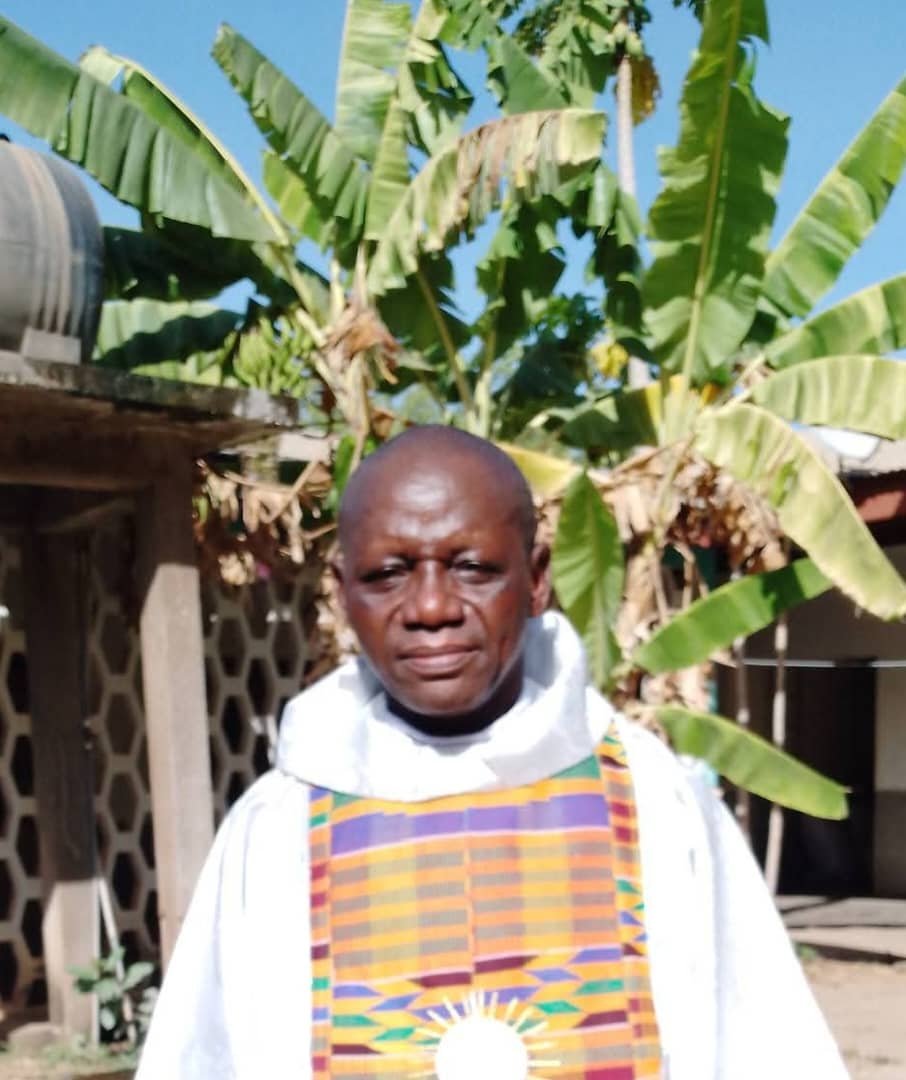
Rev. Fr. Aloysius Kpiebaya, Catholic Diocese of Wa, UW/R, Ghana. (00233) 0207867239/0545462863. Email: aloybaya20@yahoo.com.

No comments yet. Be the first to comment!