
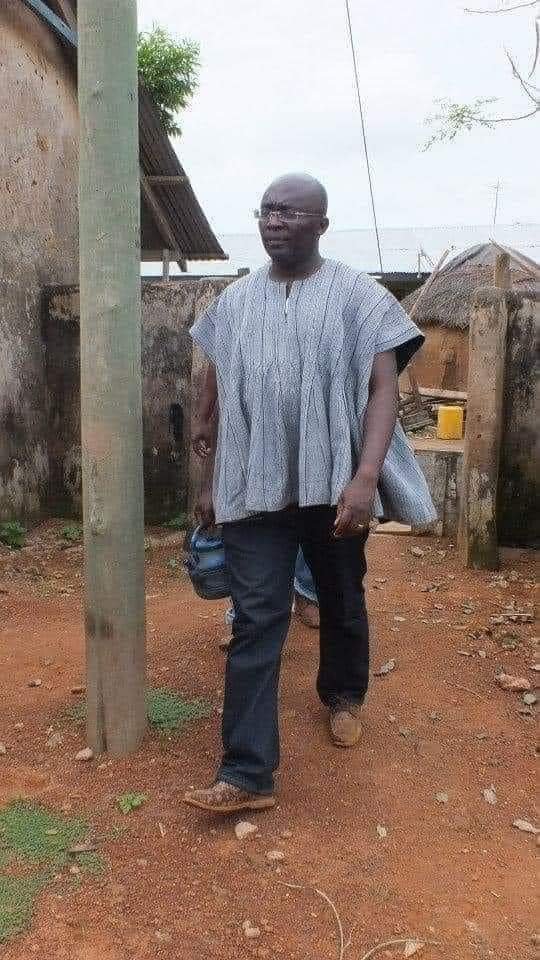
The presidential candidate of the New Patriotic Party (NPP), Dr Mahamudu Bawumia, has promised to return faith-based schools to their original owners if elected President. Although the promise may sound appealing to some religious organisations and sections of the public, it raises serious questions about its practicality, financial implications and, more importantly, its potential consequences for ordinary Ghanaian families.
One cannot help but wonder whether Dr Bawumia has carefully considered the implications of such a decision or whether this is simply another political promise being thrown into the public space in the desperate pursuit of political power.
There is no denying the enormous contribution of religious organisations to the development of education in Ghana. The Catholic Church, the Presbyterian Church, the Methodist Church and other religious bodies played significant roles in establishing schools, particularly at a time when government investment in education was limited. Their contribution to the country's educational development deserves recognition and appreciation. Indeed, many of Ghana's respected educational institutions owe their existence to the sacrifices and vision of these religious organisations.
However, acknowledging their historical contribution is one thing; handing over the responsibility of running these institutions to them under a new arrangement is another. The question is whether such a policy would serve the broader interests of Ghanaian children, particularly those from poor and disadvantaged backgrounds.
For many Ghanaian families, access to basic education remains a major concern despite the introduction of the Free Compulsory Universal Basic Education policy and the Free Senior High School programme. While tuition may be free in public basic schools, parents still struggle with other educational expenses. What, then, happens when mission schools are returned to their original owners and are subsequently operated as fully private institutions?
Would these schools continue to offer the same level of affordable education they currently provide under government-supported arrangements? Or would parents be expected to pay substantially higher fees to keep their children in these institutions?
This is where the real danger lies. If the proposed arrangement results in increased school fees, many parents who currently depend on relatively affordable mission schools may find themselves unable to keep their children in school. Some may be forced to transfer their wards to other institutions, while others may simply withdraw them from school altogether. Such an outcome would undermine the very objective of expanding access to education and could reverse some of the progress Ghana has made in getting children into classrooms.
But there is an even more fundamental question that Dr Bawumia must answer. Are the religious organisations prepared to take full financial and administrative responsibility for these schools once they are returned to them? Are they ready to pay teachers, recruit non-teaching staff, provide teaching and learning materials, maintain infrastructure and meet the growing logistical demands of running modern educational institutions?
Or will they continue to depend on the government for financial and logistical support, including the posting and payment of teachers, while simultaneously exercising full ownership and control of the schools? If government is still expected to shoulder these responsibilities, then what exactly would have changed under the proposed arrangement?
Ghanaians deserve clear answers to these questions. It is not enough for a presidential candidate to announce a policy direction and expect the electorate to embrace it simply because it sounds politically attractive. A serious policy proposal must come with a clear implementation framework, defined financial responsibilities and safeguards to protect the interests of the people who stand to be affected.
There is also the question of whether the proposed policy has been discussed with the religious organisations themselves. Are they willing and financially capable of assuming such responsibilities? Have consultations been held with the Ghana Education Service, teacher unions, parents and other relevant stakeholders? Or is this another policy announcement made without sufficient consideration of the practical realities on the ground?
Ghana has had its fair share of political promises that generated excitement during election campaigns but became difficult to implement once the politicians assumed office. Some were abandoned, others were modified beyond recognition, and many simply disappeared into the archives of political rhetoric. We cannot afford to add another ambitious but poorly thought-out promise to that list, particularly when the future of our children's education is at stake.
Dr Bawumia must, therefore, tell Ghanaians precisely what he means by returning mission schools to their original owners. Does he intend to transfer complete financial responsibility to the religious organisations? Will government continue to pay teachers and provide educational resources? Will the schools retain their current fee structures? What happens to children whose parents cannot afford any additional charges? These are not unnecessary questions. They are the very issues that should determine whether such a policy is desirable in the first place.
It is about time our politicians began taking the Ghanaian electorate more seriously. Elections should not become an occasion for politicians to make sweeping promises simply to win public approval. The people deserve policies that are realistic, properly costed and capable of standing the test of time.
The historical contributions of religious organisations to Ghana's education system must be respected. However, such recognition should not come at the expense of the educational opportunities of children from poor homes. Education is too important to become an experiment in political convenience.
If Dr Bawumia believes that returning mission schools to their original owners is the right thing to do, then he owes Ghanaians a convincing explanation of how the policy will work without making education more expensive and inaccessible to the very people who need it most.
Ghanaians are tired of promises that sound impressive during election campaigns but raise more questions than they answer. We need less political rhetoric and more practical thinking. After all, what is the value of returning schools to their original owners if the consequence is that thousands of Ghanaian children may lose access to affordable education?
The question is not simply who owns our mission schools. The bigger question is who will bear the cost, and ultimately, who will pay the price?
The Trial News
No comments yet. Be the first to comment!