
COLLECT: “DRAW NEAR TO YOUR SERVANTS, O LORD, AND ANSWER THEIR PRAYERS WITH UNCEASING KINDNESS, THAT, FOR THOSE WHO GLORY IN YOU AS THEIR CREATOR AND GUIDE, YOU RESTORE WHAT YOU HAVE CREATED AND KEEP SAFE WHAT YOU HAVE RESTORED. THROUGH OUR LORD JESUS CHRIST, YOUR SON, WHO LIVES AND REIGNS WITH YOU IN THE UNITY OF THE HOLY SPIRIT, GOD, FOR EVER AND EVER. AMEN”.
Is 55:1-3; Rom 8:35,37-39; Mt 14:13-21
DO NOT ALLOW ANYONE/ANYTHING SEPARATE YOU FROM AMONG THOSE PARTAKING IN JESUS’ BANQUET”
We can identify two types of banquets in our gospel: (i) “The Herod’s Banquet” and (ii) “The Jesus’ Banquet”.
A. “The Herod’s Banquet” can also be called “Human banquet/party”. What we read in today’s gospel immediately follows the banquet/party that King Herod the tetrarch organised on the occasion of his birthday celebration (Mt 14:1-12).
This type of banquet/party is described by Harold A. Buetow (“God still speaks:6- listen!”) as a banquet/party of murder, selfishness and “show off”. It is a banquet for a select few, for those strictly invited. It is a party for the social climbers who want to get and grab as much as they can, out of it for themselves. During such parties, people can either psychologically lose their lives through back-biting, calumny and deceit or physically lose their lives through lust for power, lasciviousness and drunkenness.
B. Jesus’ Banquet/Party:
This is a banquet of love and life, not a banquet of murder. It is a banquet of selfless sacrifice and self-giving and not a party of “show off”. It is not for the selected few and those strictly invited. Rather, it is for all classes of people no matter the race, social status, language, colour, etc.
At Jesus’ banquet, the guests’ psychological, physical, moral, social, as well as spiritual hunger and thirst are satisfied and quenched respectively. In this banquet, people gain life and do not lose it through back-biting, calumny and drunkenness.
In the banquet that Jesus organised for the five thousand (5,000) crowds that thronged to him, among them were the blind, the lame, cripple, the deaf and dumb, the poor and in fact, all categories of people were there.
These were people who were not only physically hungry and thirsty, but people who were going through trials, distress, persecution, anguish, nakedness, and peril (cf. Rom 8:35ff) for “they were confused and helpless, like sheep without a shepherd” whom Jesus had compassion on and healed their sicknesses (Mt 9:36; 14:14). These crowds were going through some hunger and thirst, and they were yearning for some psychological and spiritual satisfaction. Jesus gave them that satisfaction today.
Jesus continues to organise such banquets for us here on earth as a foretaste of the great heavenly banquet which we shall partake in at the end of our earthly life. Jesus instituted the Holy Eucharist, the summit of all the Sacraments, as a banquet par excellence for us. In the Eucharist (Mass), we come to meet and be with the Lord. We are always expected to come to him with the things that can separate us from Him and His love: Anguish, Suffering and Distress from the world and other people, Persecution from fellow human beings, Famine/Hunger, Nakedness and Peril in our lives, the Sword and Gun or whatever from those who hate us, etc. These things should not, and never separate us from the Love of Christ. When we are going through them, that is the moment we should stay very close to Jesus Christ,
The miracle of the feeding of the five thousand people is a prototype of the Eucharist, a foretaste of the Eucharist, which the crowds already partook of before the actual Eucharist was instituted on Holy Thursday.
In the Eucharist, where every day or every Sunday we listen to and share the scriptures and at the same time break and share the body and blood of Jesus, he satisfies and quenches our psychological, emotional, spiritual, social as well as our physical needs.
In the feeding of the five thousand, Jesus, we read, “…. he took the five loaves and the two fish, raised his eyes to heaven and said the blessing. And breaking the loaves he handed them to his disciples, who gave them to the crowds. They all ate as much as they wanted, and they collected the scraps left over, twelve baskets full” (Mt 14:19 & 20). The message here is that Jesus used the disciples to satisfy the needs of the crowds.
Today, we represent the disciples of Jesus, and Jesus wants to use us to satisfy and quench the hunger and thirst of other people. That is why at the end of the Eucharistic celebration (Mass), we are told very often by the Priest celebrating the Mass to either: “Go and announce the Gospel of the Lord” or “Go in peace, glorifying the Lord by your life” (The old version used to be: “Go in peace to love and serve the Lord…”). This means we should go out and witness, share and proclaim to the world and to other people what we have received and experienced in the Eucharistic celebration*. It means we should go and serve the Lord in a neighbour, particularly the neighbour who is in need in one area or the other. In fact, at the end of every Eucharistic celebration, we are commissioned and sent on a mission by Christ through the Priest, with probably the twelve wicker baskets full of the left-over fragments that were picked up, to share with other hungry and thirsty people out there, people who are experiencing, not literally, *“anguish, or distress, or persecution, of famine, or nakedness, or peril, or the sword”.
It is, however, unfortunate that sometimes some of us, after Church, do not carry out this mission entrusted to us at the end of the celebration. Let us pray that today’s Eucharistic celebration will remind us that, like Jesus, we must show concern for the sick, the hungry and the abandoned, who are looking for Jesus Christ in their lives. We pray that people who are hungry and thirsty in whichever way should not go anywhere “spending money for what is not bread; your wages for what fails to satisfy” (Is 55:1-3), looking for satisfaction, but that they should always come to Jesus Christ in faith to satisfy their needs for them. Stay blessed, and may the Lord take care of all the frustrations that we go through in life.
WE MEDITATE TODAY, SUNDAY, ON THE GLORIOUS MYSTERIES: ‘THE RESURRECTION, THE ASCENSION, THE DESCENT OF THE HOLY SPIRIT, THE ASSUMPTION, AND THE CORONATION’. (WE PRAY FAITH, HOPE, LOVE OF GOD, GRACE OF A HAPPY DEATH AND TRUST IN MARY’S INTERCESSION) “Hail Mary, full of grace, the Lord is with you, blessed are you among women, and blessed is the fruit of your womb Jesus: Holy Mary, Mother of God, pray for us, sinners, now and at the hour of our death, Amen”.
PRAYER: “ACCOMPANY WITH CONSTANT PROTECTION, O LORD, THOSE YOU RENEW WITH THESE HEAVENLY GIFTS AND, IN YOUR NEVER-FAILING CARE FOR THEM, MAKE THEM WORTHY OF ETERNAL REDEMPTION. THROUGH CHRIST OUR LORD. AMEN.”
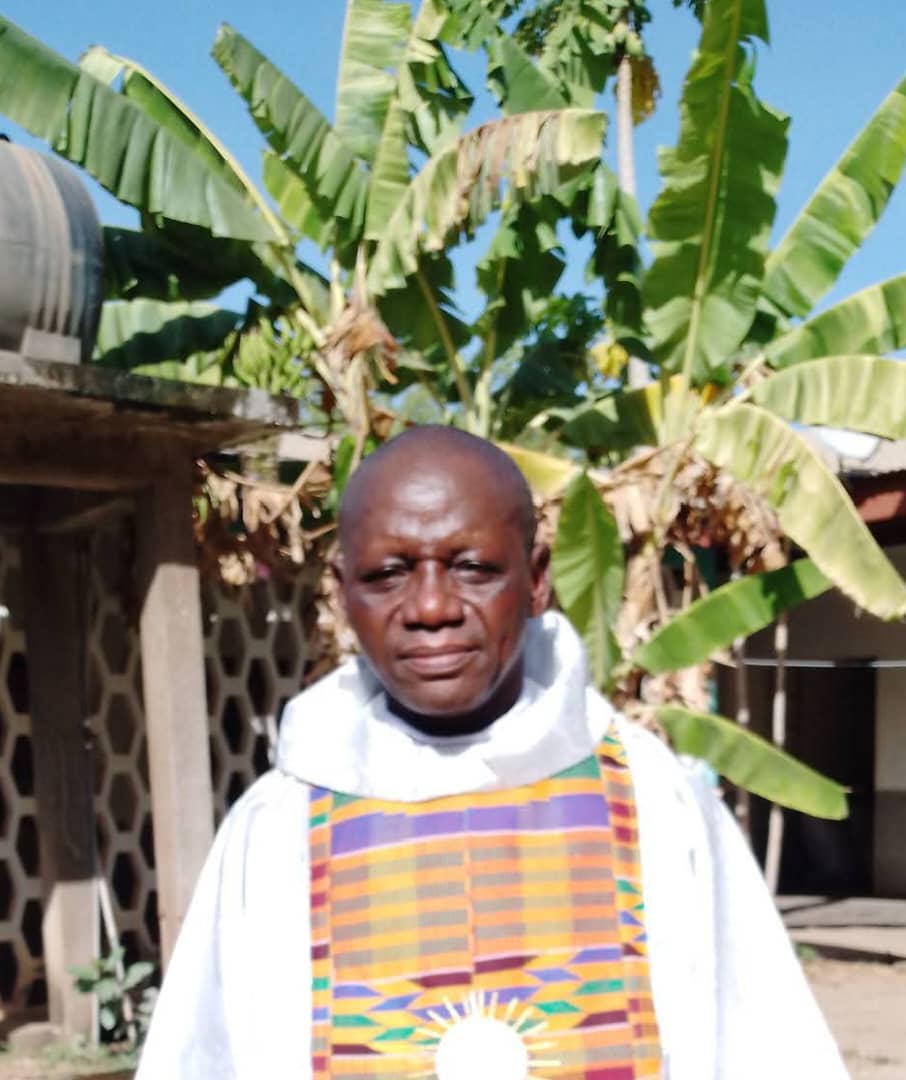
Rev. Fr. Aloysius Kpiebaya, Catholic Diocese of Wa, UW/R, Ghana. (00233) 0207867239/0545462863. Email: aloybaya20@yahoo.com.





No comments yet. Be the first to comment!