
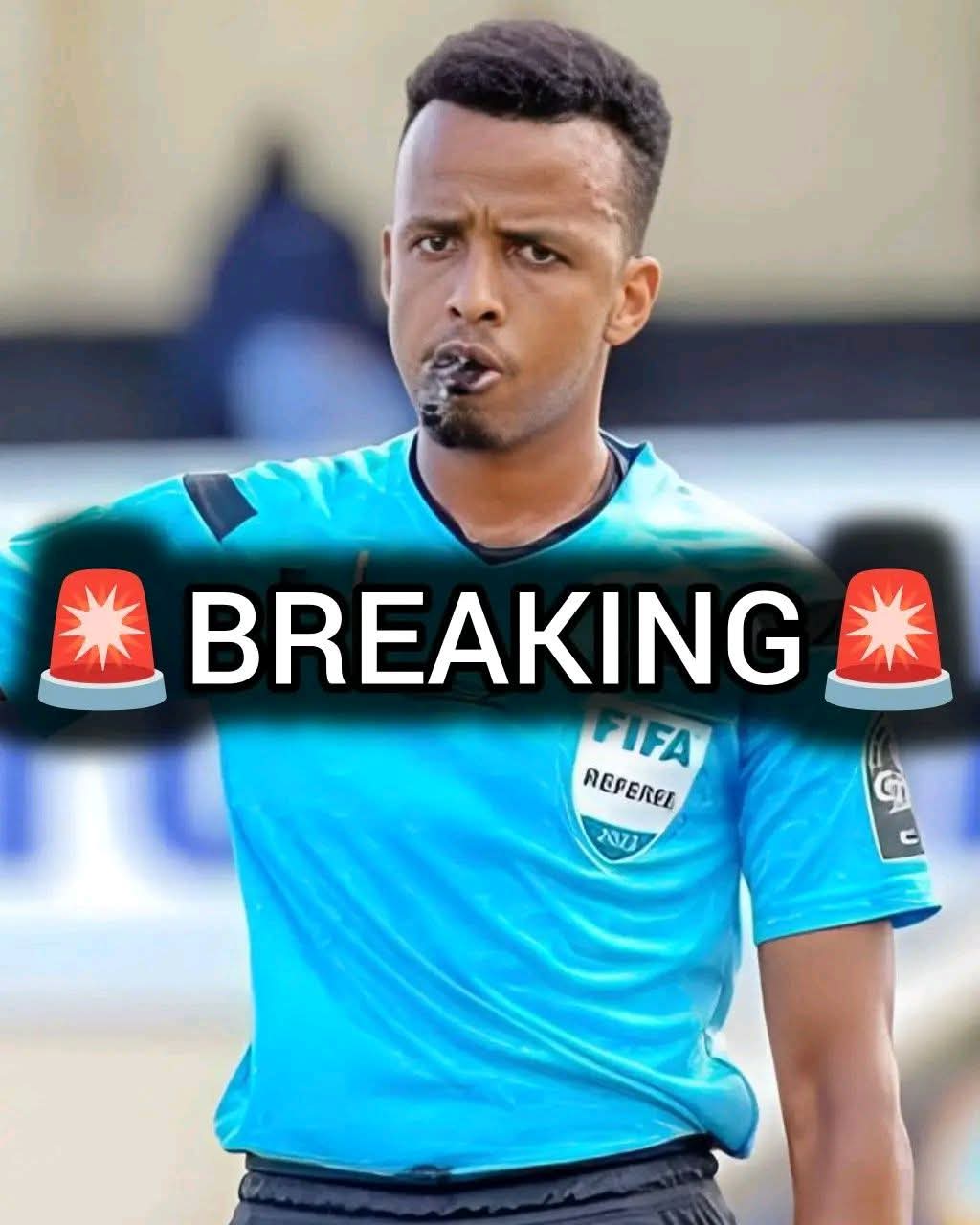
The recent announcement by FIFA confirming that Somali referee Omar Abdulkadir Artan will not participate in the 2026 FIFA World Cup after being denied entry into the United States raises troubling questions about fairness, consistency, and the integrity of global football governance.
According to FIFA's statement, the world football governing body has accepted the decision of the United States authorities and acknowledged that the referee's immigration status "will not be changed at present." FIFA further stated that it is not involved in visa adjudication processes and that host governments ultimately determine who is admitted into their countries.
While FIFA's explanation may appear procedurally correct, it leaves many observers deeply concerned about the apparent double standards that have characterised the organisation's relationship with powerful nations and less influential countries over the years.
A fundamental question must be asked: if an African nation hosting a FIFA competition had denied entry to a match official appointed by FIFA, would the world's football governing body have responded with the same level of restraint and indifference?
FIFA has never hesitated to exert pressure, issue warnings, impose sanctions, or threaten member associations whenever it believes its competitions or officials are being obstructed. Yet in this case, involving one of the most powerful countries in the world, FIFA appears content to wash its hands of the matter and accept the decision without demanding further clarification or conducting a thorough investigation into the circumstances surrounding the denial.
Such an approach undermines FIFA's long-standing commitment to fairness, equality, and non-discrimination—the very principles that form the foundation of its celebrated "Fair Play" campaign.
The controversy becomes even more sensitive because many observers believe the matter extends beyond routine immigration procedures. While the United States undoubtedly possesses sovereign authority to determine who enters its territory, questions remain as to whether broader diplomatic and political considerations may have influenced the decision.
Reports and discussions surrounding relations between the United States and Somalia have led many to speculate that the referee may have become an unfortunate casualty of wider political disagreements unrelated to football. Whether such claims are true or not, they warrant careful examination rather than outright dismissal.
FIFA's responsibility should not end with simply repeating a government's position. As the guardian of world football, the organisation has a duty to protect its officials and ensure that sporting competitions remain insulated from political disputes wherever possible.
The refusal of entry to a FIFA-appointed referee is not merely an immigration matter. It is a sporting issue with direct implications for the credibility, inclusiveness, and neutrality of the world's biggest football tournament.
Equally disappointing is the absence of visible solidarity from the international refereeing community. Football officials across the globe are united by a common profession and commitment to the game. Situations such as these call for collective concern and advocacy, particularly when one of their colleagues finds himself excluded from the sport's grandest stage under controversial circumstances.
Today it is a Somali referee facing exclusion. Tomorrow it could be another official from a different nation. The principle at stake is larger than one individual; it concerns the protection of equal opportunities for all participants in global football, regardless of nationality or geopolitical circumstances.
The United States, as host of a global tournament, also bears a responsibility to demonstrate that international sporting events can rise above political disagreements. The spirit of the World Cup demands inclusiveness, openness, and respect for the diverse nations that contribute to the global football family.
At a time when international relations are increasingly strained and political divisions continue to deepen across the world, actions perceived as discriminatory or politically motivated risk damaging not only diplomatic relationships but also the international reputation of the host nation itself.
The administration of President Donald Trump has already generated significant debate internationally over immigration policies and foreign relations. Decisions that appear to target individuals because of broader disputes with their countries can only intensify concerns about fairness and equal treatment.
Ultimately, FIFA must do more than issue a brief statement and move on. The organisation owes the football world a transparent explanation and a thorough investigation into the circumstances that led to Omar Abdulkadir Artan's exclusion from the 2026 FIFA World Cup.
Football prides itself on being the world's game—a game that transcends politics, race, nationality, and borders. If FIFA genuinely believes in the principles it promotes, then it must demonstrate that commitment consistently, whether dealing with a small African nation or a global superpower.
Anything less risks reducing the concept of fair play from a universal principle to a selective slogan.
The Trial News

No comments yet. Be the first to comment!