
COLLECT: “O GOD, WHO IN THIS WONDERFUL SACRAMENT HAVE LEFT US A MEMORIAL OF YOUR PASSION, GRANT, WE PRAY, SO TO REVERE THE SACRED MYSTERIES OF YOUR BODY AND BLOOD THAT WE MAY ALWAYS EXPERIENCE IN OURSELVES THE FRUITS OF YOUR REDEMPTION. WHO LIVES AND REIGNS WITH GOD THE FATHER IN THE UNITY OF THE HOLY SPIRIT, GOD, FOR EVER AND EVER. AMEN”
Deut 8:2-3,14b-16a; Ps 147:12-15,19-20; 1Cor 10:16-17; Jn 6:51-58.
“LORD, MAY I UNDERSTAND THE SIGNIFICANCE OF THE EUCHARIST FOR MY LIFE, AND ALWAYS BEHAVE ACCORDINGLY WHEN IT IS CELEBRATED”*.
1) Some basic catechism on the Holy Eucharist.
The Eucharist is the Sacrament of the Body and Blood of Jesus Christ, with his soul and divinity in the appearance of bread and wine. This sacrament was instituted on Holy/Maundy Thursday, the day before that fateful Good Friday when Jesus died on the cross. “At the Last Supper, Jesus knew he was leaving his disciples and going to his Father. In order not to depart from them, and to make them sharers in his Passover, Jesus instituted the Eucharist. He commanded his apostles to celebrate it until his return” (Rev. Robert J. L, Jesus, the Catechism and Me).
2) How was the Eucharist Instituted?*
Scriptures tell us that as Jesus and his disciples were eating, “Jesus took bread, and when he had said the blessing he broke it and gave it to the disciples. ‘Take it and eat,’ he said, ‘this is my body.’ Then he took a cup, and when he had given thanks he handed it to them saying, ‘Drink from this, all of you, for this is my blood, the blood of the covenant, poured out for many for the forgiveness of sins. From now on, I tell you, I shall never again drink wine until the day I drink the new wine with you in the kingdom of my Father” (Mt 26:26-29; Mk 14:22-25; Lk 22:19-20; Jn 6:51-58; 1Cor 11:23-25). When Jesus said these words and blessed the bread and wine, they became his body and blood but still in the appearance of bread and wine.
When instructing the people of Corinth, and as a way of handing over the tradition that he received, Paul told them how the Eucharist was instituted. “…on the night he was betrayed, the Lord Jesus took some bread… ‘This is my body which is for you; …And in the same way, with the cup… Whenever you drink it, do this as a memorial of me. Whenever you eat this bread, then, and drink this cup, you are proclaiming the Lord’s death until he comes” (1Cor 11:23-27). These words are always prayerfully repeated by the Priests at the consecration any time we celebrate the Eucharist (Mass). At the consecration, the substance of the bread and wine is changed into the substance of Christ’s body and blood. This is called TRANSUBSTANTIATION. The appearance of bread and wine remains but the living and glorious Christ is really and truly present with his Body and Blood, his Soul and his Divinity. This however can only be acceptably understood by a person with the eyes and heart of faith. We however genuflect or bow before this real presence of Christ in humble adoration. We also reserve this in Tabernacles in our Churches or Chapels and expose it in solemn venerations or adorations, and carry it in processions especially during Corpus Christi.
3. The Importance of the Eucharist in our Lives.
The importance of the Eucharist.
(i) This is nourishment (spiritual food and drink) for our souls, giving strength and energy to our souls and enabling us to withstand temptation and sin.
(ii) It increases our union with Christ, preserving, increasing and renewing the baptismal life of grace in us.
(iii) It separates and cleanses us from past and present sins, and preserves us from future ones.
(iv) The Eucharist makes the Church. By the Eucharist, Christ unites all the faithful into one body, the Church. It is the bond of charity and love.
(v) The Eucharist indeed, is the summit/the apex/the highest point of the Christian life because in it Christ joins us all in his Church with the sacrifice of praise and thanks to his Father which was offered once on Calvary.
4) What The Eucharist Means for Us Today.
The greatest gift that Jesus left for/with us is spiritual nourishment. By implication, it is also a physical nourishment in the sense that when the soul, which is an aspect or component of the human person is fed and is strong, the other part, the body of the human person is equally fed and it becomes strong. Therefore, being nourishment for both our spiritual and physical hunger, the Eucharist keeps and protects us from spiritual malnutrition.
We have been afflicted by numerous unfulfilled, unsatisfied and unquenched desires and needs and these are like a type of hunger and thirst we are going through in lifeIn such situations we are like the Israelites, going through our own “Egypt” experience of slavery, journeying through a “vast and terrible desert with its seraph serpents and scorpions, and its parched and waterless ground” (Deut 8:14-16).
More and more people in the world over, do not only hunger and thirst for physical food and drink. There are a lot of people in the world who hunger and thirst for Justice, Peace, Freedom, Reconciliation, Understanding, Friendship, Love, Truthfulness, Leadership, etc. Such hunger and thirst cannot and can never be satisfied or quenched by any physical food and drink but by the Word of God.
When Moses was reminding the Israelites all that the Lord did for them for forty years during their desert journeying from Egypt to the Promised Land, alluded to the fact that it is “not by bread alone does one live, but by every word that comes forth from the mouth of the Lord” (Deut 8:3). Jesus quoted this verse at his temptation in the desert after his fasting (Mt 4:4).
Many people think that life is all about or that life is based on satisfying their appetites such that if they can earn enough money to dress, eat, play and display in high style, they think they are living “the good life” while in fact, such things do not satisfy our deepest longings and yearnings. In the end, they leave us empty and dissatisfied. There are a lot of wealthy people in the world who do not live happy, fulfilled and satisfied lives even though they have everything in the world. Real life: a happy, fulfilled and satisfied life, according to Moses and Jesus comes from total commitment to God and living by every word that comes from Him.
Unfortunately, while a lot of people ignore this spiritual nourishment for no apparent reason (maybe, out of pride and arrogance), others cannot receive this nourishment because they are not in the state of grace: they live in mortal sin. However, those who live in the state of mortal sin must receive absolution, first in the Sacrament of Penance or Reconciliation before they can be in the state of grace to receive Holy Communion. This means that it is a grave sin and deadly to receive Holy Communion in sin. St. Paul, again, instructing the Corinthians on the right disposition to receive Communion said that “Everyone is to examine himself (or herself) and only then eat the bread or drink from the cup; because a person who eats and drinks without recognising the body is eating and drinking his (or her)own condemnation. That is why many of you are weak and ill and a good number have died (spiritually). If we were critical of ourselves we would not be condemned, but when we are judged by the Lord, we are …” (1Cor 11:28-34).
The other side of the above is that some people who feel and think that they are not in the state of grace to receive Holy Communion do not see the need to go to Church, and for that matter, on Sundays, they prefer doing other things at home or elsewhere to going to Church. This is not good. Please, if for one reason or the other you cannot receive Holy Communion, that does not mean that you are cut off completely from a life of union with Jesus Christ and therefore have no possibility of being nourished by him. What we should note is that, all believers, even if you are not in the state of grace (if you are a sinner) must go to Jesus and encounter him. This is possible through full participation in the Eucharistic celebration. Listening attentively to the Word of God is satisfying. Therefore, do not be left out at the Eucharistic banquet table of the Lord where he invites everybody, for there are a lot of benefits you can receive from this Eucharistic banquet. Happy Feast of the Most Holy Body and Blood of Christ (Corpus Christi) and God bless you.
WE MEDITATE TODAY, SUNDAY, ON THE GLORIOUS MYSTERIES: ‘THE RESURRECTION, THE ASCENSION, THE DESCENT OF THE HOLY SPIRIT, THE ASSUMPTION, AND THE CORRONATION’. (WE PRAY FAITH, HOPE, LOVE OF GOD, GRACE OF A HAPPY DEATH AND TRUST IN MARY’S INTERCESSION) “Hail Mary, full of grace, the Lord is with you, blessed are you among women, and blessed is the fruit of your womb Jesus: Holy Mary, Mother of God, pray for us, sinners, now and at the hour of our death, Amen”.
PRAYER: “GRANT, O LORD, WE PRAY, THAT WE MAY DELIGHT FOR ALL ETERNITY IN THAT SHARE IN YOUR DIVINE LIFE, WHICH IS FORESHADOWED IN THE PRESENT AGE BY OUR RECEPTION OF YOUR PRECIOUS BODY AND BLOOD. WHO LIVE AND REIGN FOR EVER AND EVER. AMEN.”
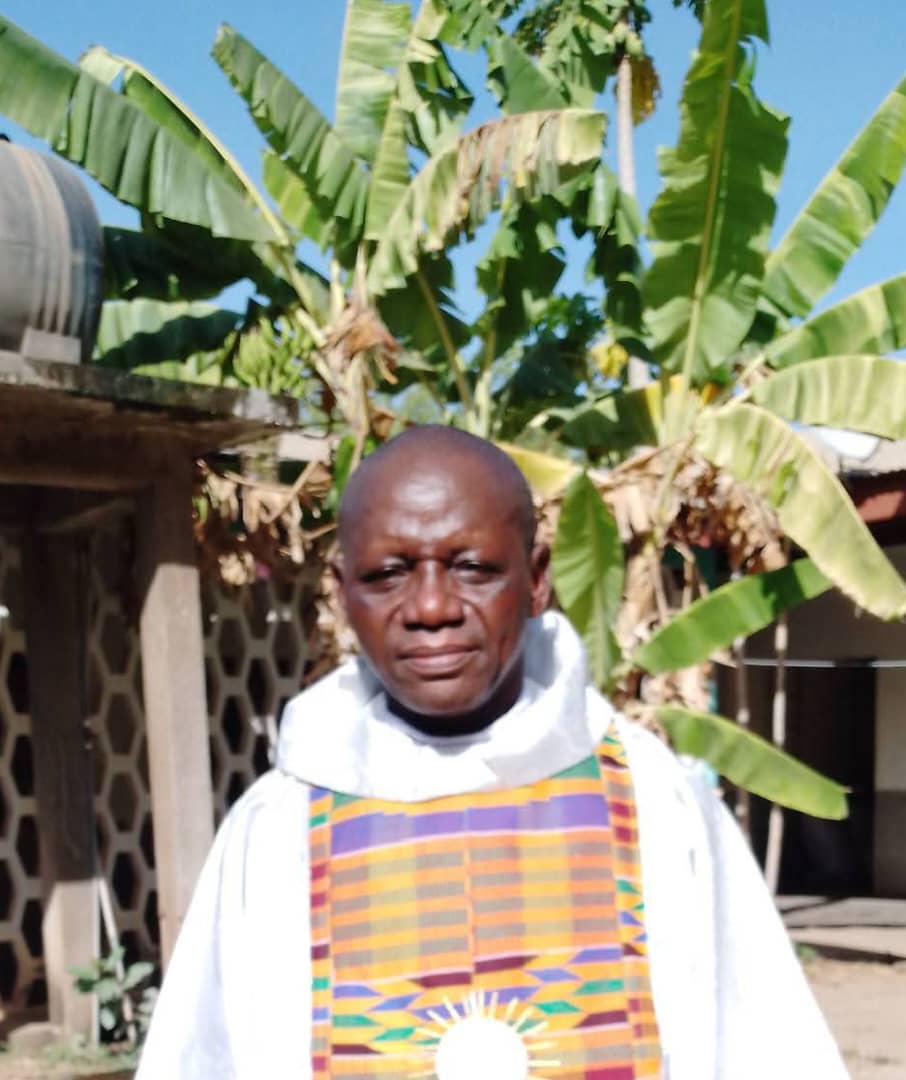
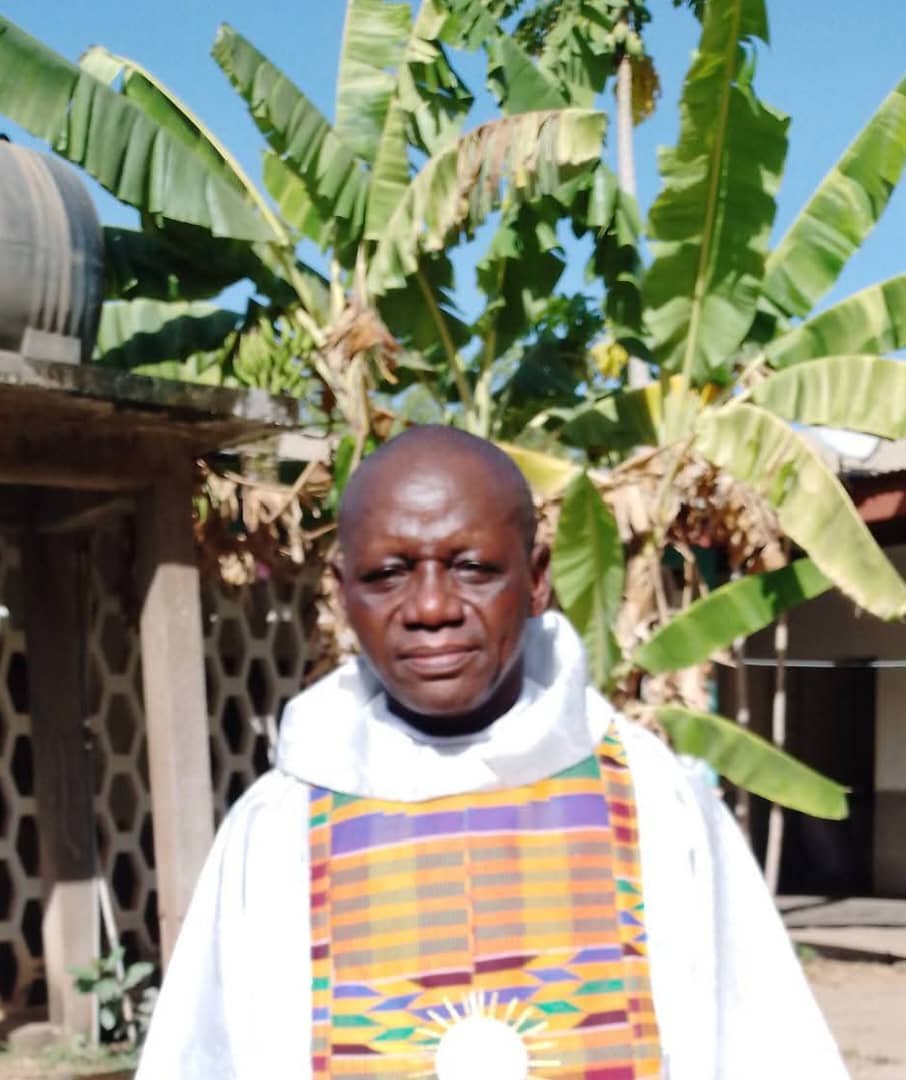
Rev. Fr. Aloysius Kpiebaya, Catholic Diocese of Wa, UW/R, Ghana. (00233) 0207867239/0545462863. Email: aloybaya20@yahoo.com.
No comments yet. Be the first to comment!