
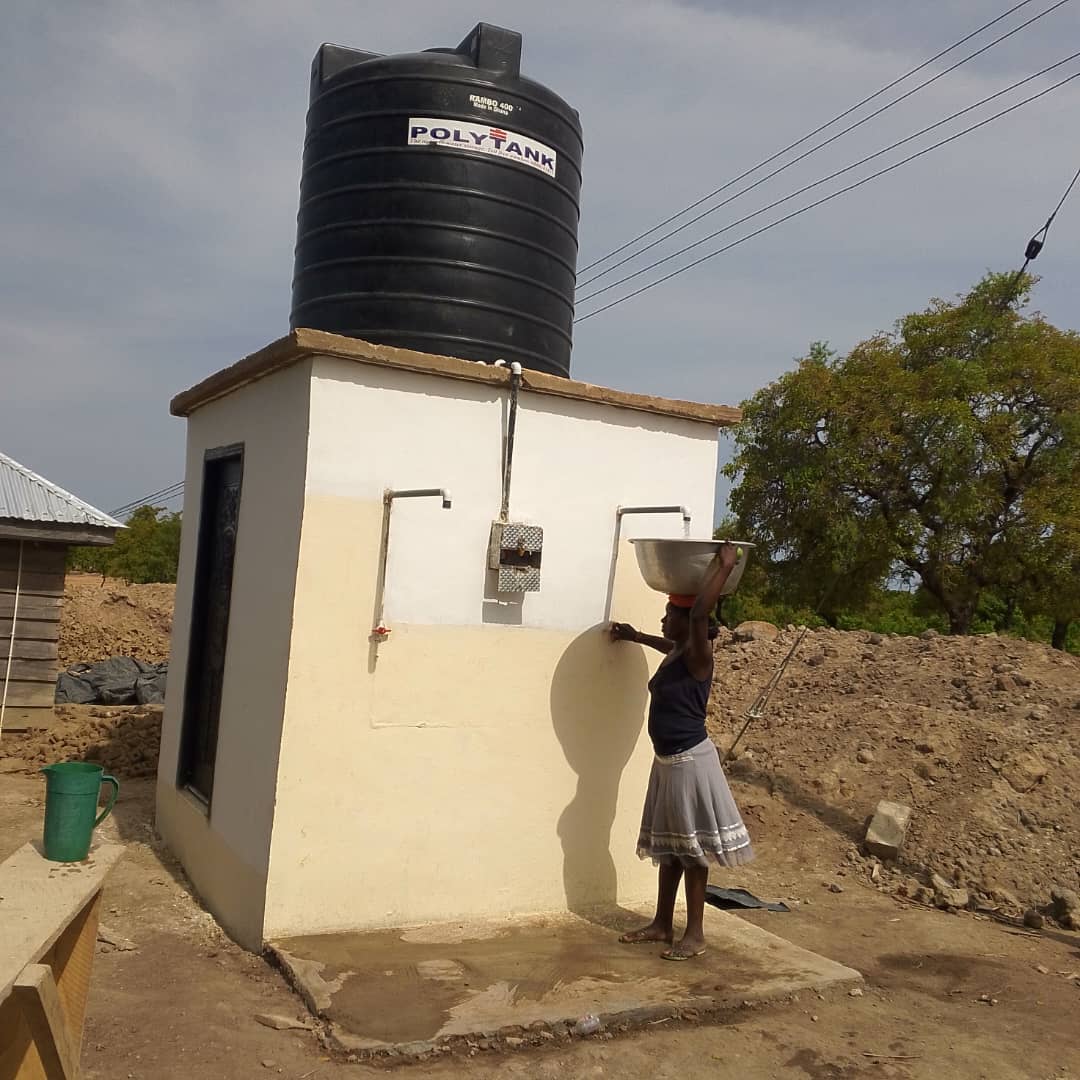
The people of Paali can now heave a sigh of relief with the commissioning of a fully mechanised borehole water system by the management, workers and leadership of the Gbankor Brick and Tile Factory as part of the factory’s corporate social responsibility initiative.
Addressing the chiefs, elders, women and youth of Paali during the commissioning ceremony the Chief Executive Officer and Chief of Gbankor, Naa Jamaa Mantara II, stated that his presence in the community was not related to chieftaincy matters, but rather for a cause he deeply cherished - the growth and development of Paali and other neighbouring communities. He explained that the success of the Gbankor Brick and Tile Factory was not the achievement of one individual, but the result of the collective effort and sacrifice of many people, particularly the youth who supported the factory's vision from its inception around 2014 and 2015.
According to the Chief who is also known in private life as Mr Emmanuel Mwinla-Yuori, many people initially doubted the feasibility and sustainability of establishing such a factory in Gbankor. At a point during his address, he invited the management and workers of the factory to stand behind him, so that the people could appreciate those whose dedication and hard work had contributed to the success of the enterprise. The gesture was met with loud applause and appreciation from the gathering.
Naa Jamaa Mantara II also recalled key messages delivered during his coronation about fifteen years ago. He reiterated his call for unity among the people, stressing that development could only be achieved through togetherness and collective effort. Using the symbolism of a broom, he explained that a single broomstick could easily be broken, but when broomsticks are tied together, they become strong and difficult to break. He particularly encouraged the youth to see themselves as one people and work together toward the development of their communities, noting that no outsider would come to develop their communities for them if they failed to unite and take responsibility for their own progress.
The Chief of Gbankor further stated that he had pledged during his coronation to be a chief for all, especially the youth and women, whose welfare and empowerment remain close to his heart. He stressed the importance of supporting women, whom he described as among the most vulnerable groups in society. He also stated that the youth are the future leaders of their communities and they must therefore be supported enough with the necessary resources to achieve their goals in life.
Giving a background to the water project, Naa Jamaa Mantara II disclosed that the factory had committed from the beginning of its operations to set aside five pesewas from every brick sold to support developmental projects within the communities. He explained that the initiative was particularly intended to support education and youth development. He further revealed that after Gbankor had benefited from some of the factory’s social interventions, management decided to extend similar support to neighbouring communities like Paali. According to the CEO of Gbankor Brick and Tile Factory, a delegation from the factory including himself had visited Paali some months earlier to identify the community’s most pressing need, and the people indicated that access to potable water was a major challenge confronting them. He said management later reviewed the factory’s development fund and realised that the amount available was insufficient to undertake the project. However, they added extra funds to bring the total amount to about GHC 50,000 which was used to fully execute the mechanised borehole project. The project, he explained, operates on a solar-powered system to reduce the burden of electricity costs on the community. He noted that the system would also ensure reliable access to water both day and night without incurring additional energy expenses.
Before concluding his speech, Naa Jamaa Mantara II urged the people of Paali to take proper care of the facility to ensure its sustainability and long-term benefit to the community. He underscored the importance of clean and accessible water, stressing that women and children would no longer have to travel long distances in search of water from unsafe sources.
He further appealed for continued support from the youth and once again emphasised the importance of unity as the foundation for development. He assured the people that the Gbankor Brick and Tile Factory remained committed to supporting development across neighbouring communities and that more communities would soon benefit from similar interventions.
The chiefs, elders, women, youth, and the assembly member of Paali, in separate remarks, expressed profound gratitude to Naa Jamaa Mantara II, the management, and the workers of the factory for their continuing support to the community and called for God’s blessings and protection upon the management and workers of the company. The residents described the water project as a major relief to the community and pledged to maintain the facility for the benefit of present and future generations.
The Trial News







Ishmeal Addo
May 13, 2026 12:25 amHi