
There was a time when America’s greatest strength was not merely the size of its economy, the sophistication of its military or the power of the U.S. dollar. One of America’s greatest strategic assets was the confidence and trust of its allies. From Europe to Canada, Japan, South Korea and Australia, the United States built an extraordinary network of alliances and bilateral relationships after the Second World War. These relationships did not always mean that America and its partners agreed on everything, but there was an underlying understanding that disagreements would be managed through diplomacy, negotiation and mutual respect.
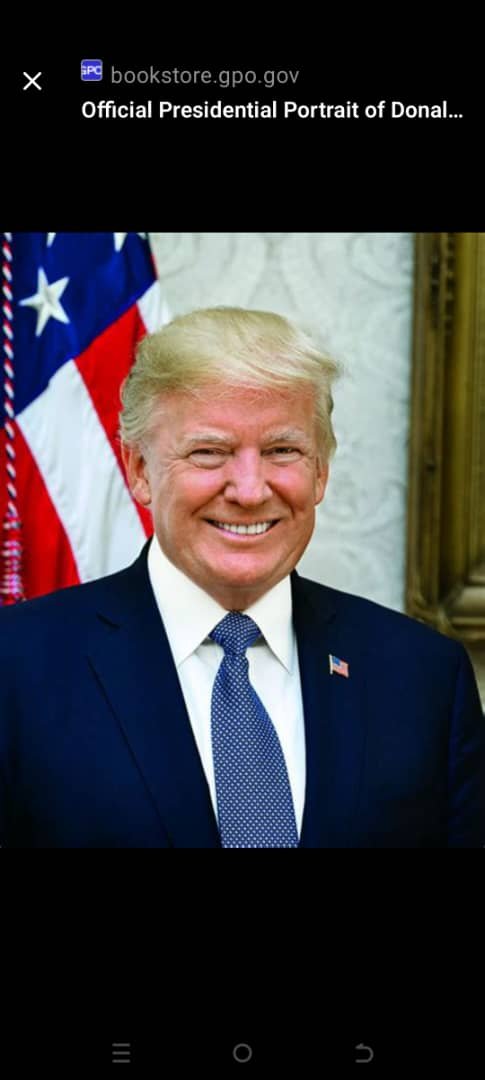
Today, however, that confidence is increasingly under strain. President Donald Trump’s second administration appears determined to redefine America’s relationship with the rest of the world through a much more transactional philosophy: America must get more from its allies, trade partners must make greater concessions to Washington, and countries that refuse to comply should be prepared to face tariffs, sanctions or other forms of economic pressure. The question is whether America is winning by adopting this approach or whether it is slowly destroying one of the greatest strategic advantages it has enjoyed for decades. Recent developments suggest that the latter possibility cannot simply be dismissed.
The breakdown in U.S.-Canada trade negotiations is perhaps one of the clearest examples. Canada has traditionally been one of America’s closest friends and most important economic partners, yet negotiations have collapsed amid escalating tariff disputes, with Washington imposing a 50 per cent tariff on about $20 billion worth of Canadian exports and Ottawa preparing retaliatory measures. Canadian Prime Minister Mark Carney has increasingly emphasized the need for Canada to reduce its vulnerability to the United States and diversify its economic relationships. When a country begins making plans to reduce its dependence on its closest neighbour because it no longer trusts that neighbour’s trade policy, something fundamental has changed.
The same concern is visible in Europe. European governments have spent decades regarding the United States as the principal pillar of the Western security architecture, yet the Trump administration’s approach to NATO, tariffs and broader foreign policy has created growing uncertainty about the reliability of Washington. The European Union has already had to negotiate under the shadow of American tariffs, while European policymakers increasingly discuss strategies for reducing their dependence on the United States. European officials are not necessarily abandoning America, but they are clearly beginning to prepare for a world in which they cannot assume that Washington will always be predictable. That is a dangerous development for America.
Foreign policy is not merely about imposing one’s will. It is also about persuading other countries that their interests are safer when they cooperate with you than when they oppose you. America’s enormous global influence was built partly on that principle. But if America’s traditional allies begin to conclude that Washington is becoming an unreliable partner, they will naturally look elsewhere. And this is where China, Russia and, to a lesser extent, Iran could benefit.
China has enormous economic resources and is aggressively expanding its trade and diplomatic relationships across Africa, Asia, Latin America and the Middle East. Russia, despite its own economic limitations, continues to seek opportunities to expand its political and strategic influence. Iran, meanwhile, has maintained important economic relationships with countries willing to resist American pressure, particularly China and Russia. Current developments surrounding Washington’s attempt to isolate Tehran demonstrate how difficult it can be for the United States to impose its will when major powers are prepared to maintain relationships with Iran.
Imagine, therefore, a situation in which European countries increasingly trade with China, Canada deepens its commercial relationships with other countries, Asian allies begin diversifying their security and economic partnerships, and countries in the developing world increasingly view China and other powers as alternative sources of investment, infrastructure and trade. America would not suddenly collapse, but its influence could gradually diminish. That is how great powers lose influence—not necessarily through one spectacular defeat, but through the gradual erosion of confidence.
There is another serious problem with Trump’s trade strategy. Tariffs are often presented to ordinary Americans as though the foreign country is simply paying America money. But tariffs are duties collected by the U.S. government on imports, and their economic burden can be shared by American importers, businesses and consumers through higher costs. The Tax Foundation estimates that the effective U.S. tariff rate rose dramatically during Trump’s first year back in office, while other economic analyses warn that sustained tariffs can reduce economic output.
This means that the slogan of protecting American workers can become considerably more complicated in practice. If an American manufacturer imports machinery, components or raw materials that become more expensive because of tariffs, the manufacturer has several choices: absorb the additional cost, reduce investment, cut jobs or pass the cost on to consumers. The American family can eventually feel the consequences through higher prices, while small businesses can struggle with increased operating costs. American farmers can also suffer when foreign countries retaliate against U.S. agricultural products, and manufacturers can find themselves paying more for imported components. In this sense, a trade war can become a very expensive patriotic exercise.
The United States certainly has legitimate grievances with some of its trading partners. America has every right to demand fairer trade, better market access and greater contributions from allies to collective defence. But there is a difference between demanding fairness and repeatedly threatening the very countries whose cooperation America needs. There is a difference between negotiating firmly and making allies feel that they are being treated like adversaries. And there is a difference between putting America first and putting America alone.
That brings us to an uncomfortable question for the American people: Did Americans make a mistake by giving Donald Trump a second term? That is a question Americans themselves must ultimately answer. But there is something rather amusing—and perhaps humbling—about what is happening. For years, African countries have been mocked for electing leaders who make questionable decisions, undermine institutions, mismanage economies and damage relationships with development partners. African politicians and voters have frequently been told that their countries would progress faster if they simply elected better leaders.
Yet here is America—the world’s self-proclaimed champion of democracy—demonstrating that elections do not come with an automatic guarantee of wisdom. Apparently, even Americans can elect a politician whose policies leave them arguing with their closest friends. So perhaps Africans should stop assuming that only African voters make political mistakes. America has made its own political choices, and now the consequences are being debated not only in Washington but in Ottawa, Brussels, Seoul and other capitals around the world.
The irony is striking. The country that has spent decades encouraging other nations to build strong international partnerships now appears to be making some of its own traditional partners reconsider how much they can depend on Washington. America’s competitors could hardly have asked for a better opportunity. China does not need to defeat America militarily if American allies voluntarily become less dependent on Washington. Russia does not need to destroy NATO if disagreements within the alliance continue to weaken trust. Iran does not need to defeat American diplomacy if Washington’s allies increasingly question the wisdom of following every American foreign-policy demand.
This is the danger of diplomacy conducted primarily through pressure. A country may win today’s negotiation but lose tomorrow’s relationship. It may force an ally to accept a tariff today while encouraging that same ally to search for alternative markets tomorrow. It may compel a country to make a concession today while simultaneously teaching its leaders that they must become less dependent on America in the future. That is not necessarily a strategic victory; sometimes it is simply the postponement of strategic defeat.
America remains enormously powerful. Its economy remains one of the world’s largest, its military remains unmatched in many respects, and the dollar continues to give Washington extraordinary financial influence. Therefore, it would be premature to announce the end of American global leadership. But power without trust is a fragile foundation.
America’s greatest international achievement after the Second World War was not merely building a powerful military. It was constructing a system in which other countries believed that cooperation with the United States served their interests. If that confidence disappears, America’s competitors will not have to destroy the system; they will simply inherit the space America leaves behind.
President Trump promised to make America great again. The irony is that America cannot remain great in isolation. A great power needs strong friends, reliable allies and trusted trading partners. It needs diplomacy that persuades as much as it pressures, and above all, it needs the rest of the world to believe that doing business with America is safer andd and more beneficial than doing business without America.
If Trump’s policies continue to push America’s friends away, Washington may eventually discover a painful truth: America First can become America Alone if a country forgets that even the most powerful nations need friends.
The Trial News







Hawa Daari
Sep 2, 2026 7:29 pmThat man chooses do things in his own way but God's ways are supreme.America is not an Island and can not survive alone without others.