
Introduction
Holy Thursday, also known as Maundy Thursday, stands as one of the most profound observances in the Catholic liturgical year. It marks the beginning of the Sacred Paschal Triduum—the three-day journey through the Passion, Death, and Resurrection of Jesus Christ. As the Church enters this solemn period, Holy Thursday invites the faithful to contemplate the deep mysteries of love, sacrifice, and service that Christ handed down on the night before His crucifixion.
The Institution of the Holy Eucharist
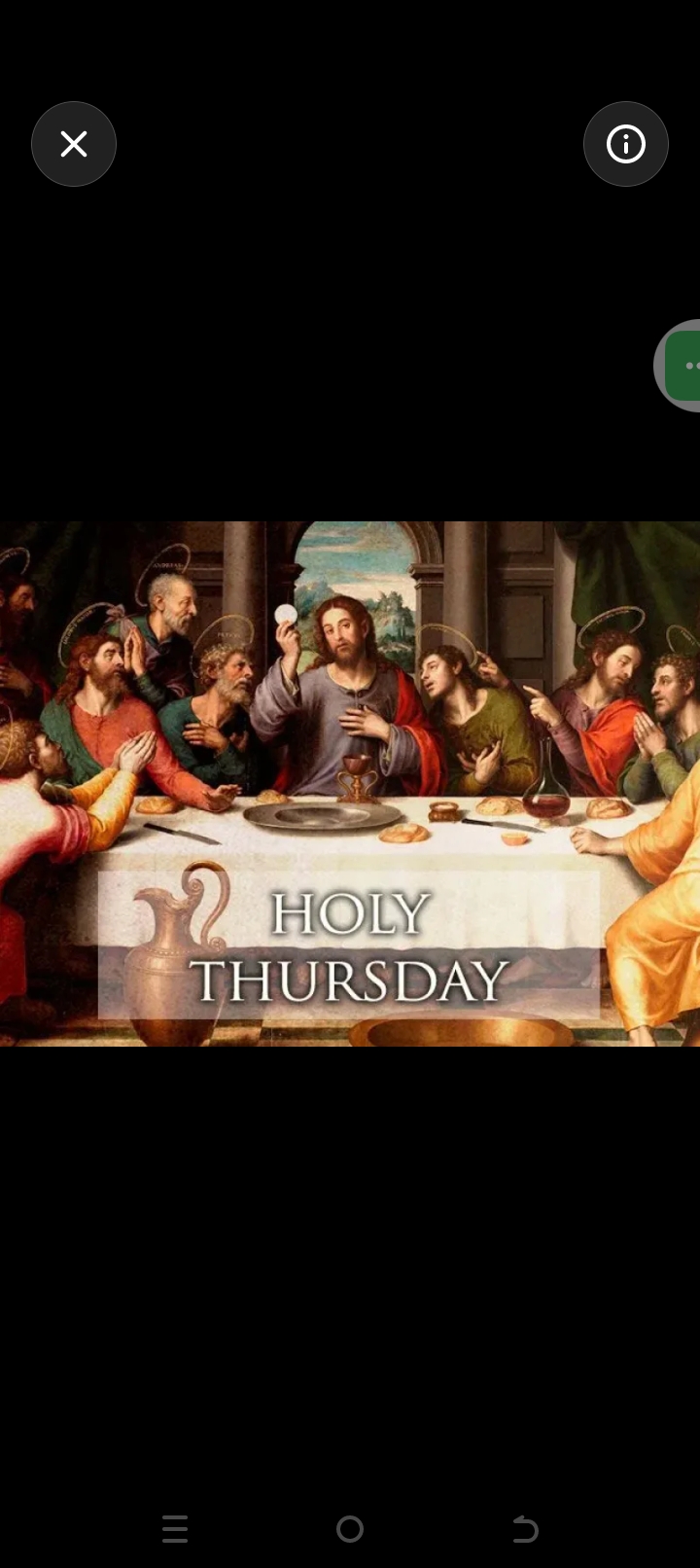
At the heart of Holy Thursday is the commemoration of the Last Supper, during which Jesus instituted the Holy Eucharist. This moment forms the foundation of the Catholic faith, for in it Christ gave Himself as the Bread of Life, instructing His disciples: “Do this in memory of me.”
In every celebration of the Mass, the Church re-lives this sacred event, praising God for the gift of Christ’s Body and Blood—a sacrament of unity, nourishment, and divine love.
The Birth of the Ministerial Priesthood
Holy Thursday also celebrates the institution of the Priesthood. As Jesus entrusted His apostles with the mandate to celebrate the Eucharist, He empowered them to continue His saving mission on earth.
The priest, in this sense, becomes a living instrument of Christ—offering sacrifice, reconciling sinners, and shepherding the faithful. Holy Thursday is, therefore, a moment of gratitude for the men who dedicate their lives to this sacred calling.
The Mandatum: A Lesson in Humble Service
One of the most powerful symbols of Holy Thursday is the Washing of Feet, known as the Mandatum. Jesus, the Master and Lord, knelt before His disciples and washed their feet—an act that reversed all expectations of power and authority.
Through this gesture, He offered a timeless lesson: true leadership is rooted not in dominance, but in humble service. He gave the commandment: “Love one another as I have loved you.” This command remains at the heart of Christian discipleship.
The Chrism Mass: A Celebration of Unity
In many dioceses, the morning of Holy Thursday is marked by the Chrism Mass, presided over by the Bishop. During this celebration:
The Oil of the Sick,
The Oil of Catechumens, and
The Sacred Chrism
are blessed and consecrated.
These holy oils will be used throughout the year in Baptism, Confirmation, Anointing of the Sick, and Holy Orders. The Mass also serves as a moment of renewal, as priests publicly recommit themselves to faithful service.
The Mass of the Lord’s Supper
In the evening, the Church gathers for the Mass of the Lord’s Supper, a liturgy filled with rich symbolism. After Communion, the Blessed Sacrament is carried in a solemn procession to the Altar of Repose, where the faithful are invited to spend time in silent adoration, recalling Christ’s agony in the Garden of Gethsemane.
The main altar is then stripped bare—an act that anticipates the starkness of Good Friday and symbolises the abandonment Jesus soon experienced.
The Deeper Significance of Holy Thursday
Holy Thursday is not only a remembrance of historical events; it is an invitation to enter spiritually into Christ’s final hours. The faithful are called to:
Reflect on the immeasurable gift of the Eucharist,
Pray for priests and support their mission,
Embrace humility in daily life,
Practice sincere love toward others, especially the vulnerable.
In a world often marked by division and self-interest, Holy Thursday becomes a reminder that love and service are the pathways to peace, unity, and authentic Christian witness.
Conclusion
As the faithful accompany Jesus from the Upper Room to Gethsemane, Holy Thursday opens the door to the central mystery of salvation. It is a night of profound gratitude—for the Eucharist, for the Priesthood, and for Christ’s example of self-emptying love.
As the Church enters the Triduum, the message of Holy Thursday continues to resonate: to love, to serve, and to give ourselves fully as Christ did.



No comments yet. Be the first to comment!