
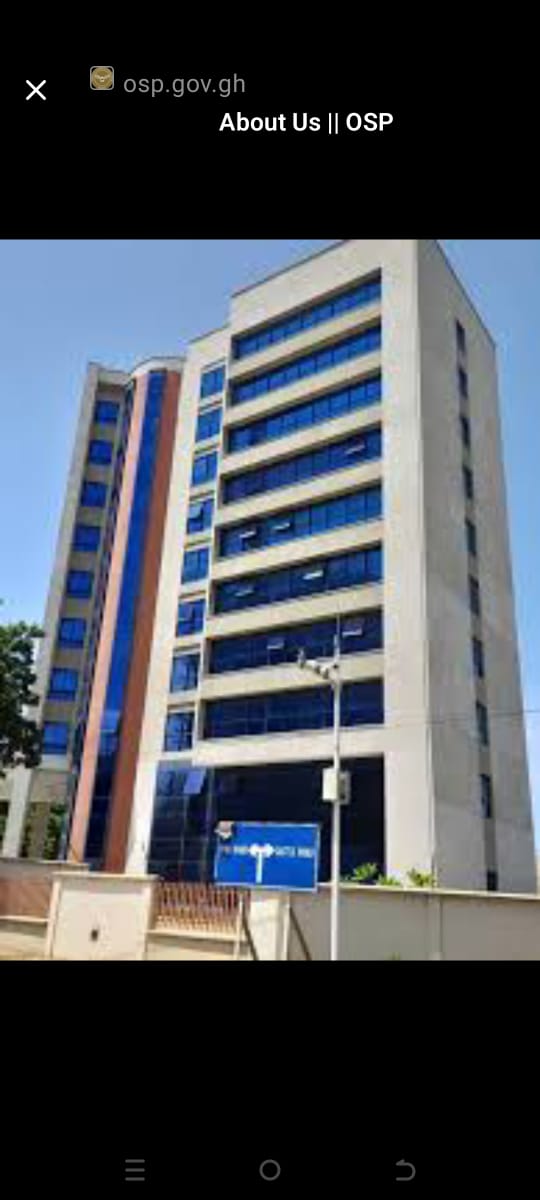
Corruption continues to rob Ghana of development, dignity, and hope. In response, government after government has created new offices, committees, and institutions, all in the name of curing this cancer. Yet, the more institutions we produce, the less progress we see. The Office of the Special Prosecutor (OSP) is a clear example — a body that many believed would redefine the fight against corruption, but one that has instead become another expensive layer performing roles that other existing bodies are already mandated to carry out.
Those who argue that the OSP is not a duplication often rely on the idea of independence and specialisation. But in Ghana’s political environment, independence is only theoretical. No institution in this country can boldly claim to operate freely without political influence. Our politics is too intertwined, too polarised, and too deeply rooted in patronage for total independence to exist. The OSP was expected to rise above these barriers, yet its operations have shown otherwise.
If anything, the manner in which the office handles its cases raises more questions than confidence. Instead of a feared, fearless watchdog of the state, the OSP has become an institution whose actions and public engagements lean dangerously close to political favour-trading and media theatre. Rather than operating as a focused, silent hammer against graft, it has offered more public commentary than tangible impact — issuing half-baked pursuits, open threats, and incomplete prosecutions. The biggest scandals, those that have cost the nation billions and strangled development, continue unresolved. While the small cases and sideshows receive publicity, the giants of corruption walk freely.
What then is the purpose of an institution created to do what EOCO, CHRAJ, the Police CID, and the Attorney-General’s Department already have the legal mandate to do? If the OSP brings nothing new in competence, capacity, or outcomes, then it is a duplication — and a costly one. Millions of cedis are being spent to finance an institution that is yet to prove it is better than those that already exist. More resources mean little without results. And in a country already overwhelmed by waste, where government struggles to adequately fund key sectors, it is financially unreasonable to keep the OSP running when corruption remains unshaken.
If Ghana truly wants to fight corruption, then we must stop multiplying the same functions across new institutions. Instead, we must strengthen those already existing — equip them, depoliticise them, enforce accountability within them. Merging expertise, resources, intelligence and legal power into fewer, stronger bodies will achieve results far better than spreading scarce funds across multiple feeble ones.
The OSP, created with hope, has become a symbolic office instead of a transformative one. Its relevance must be questioned, and if it cannot deliver what it promised, it should not continue consuming public money. Scrapping it is not backward — it is efficient leadership, responsible governance, and a necessary step if we are serious about confronting corruption head-on.
Ghana cannot continue funding institutions that add nothing new except cost. The time has come to cut out duplications, not nurture them. The OSP has run its trial, and the results are clear: it is an idea that looked good on paper, but in practice, it is a burden Ghana must let go of.
The Trial News
Aziz
Dec 4, 2025 12:57 pmA succinct account of the OSP