
The recent defence by the Minister of Education regarding the abrupt closure of the Ghana Education Service (GES) recruitment portal raises more concerns than it resolves. At a time when thousands of qualified graduates anxiously seek employment, the attempt to justify an evidently flawed process under the guise of “fairness” is both disappointing and unacceptable.
The Trial News came across a publication in which the Minister sought to justify the decision to close the recruitment portal. However, The Trial News finds these justifications feeble and porous, failing to address, let alone alleviate the frustration of affected graduates, particularly those who could not find their institutions listed on the portal and were consequently denied the opportunity to complete the submission of their applications.
The Trial News maintains that what occurred was not an act of fairness, but a clear case of administrative lapse—one that has had real and damaging consequences for many young graduates. The Minister would serve the public better by acknowledging this lapse and offering a sincere apology, rather than advancing explanations that do little to address the injustice suffered.
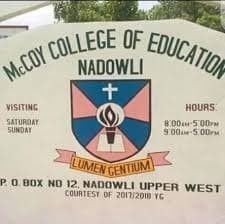
A particularly troubling aspect of this situation is the reported omission of a recognised institution, McCoy College of Education from the recruitment portal. This glaring oversight effectively denied its graduates the opportunity to even participate in the application process. One must ask: how does a legitimate institution vanish from an official government platform? What mechanisms were in place to ensure data integrity, and why did they fail so catastrophically?
These are not abstract concerns. They are questions that go to the heart of equity, transparency, and competence in public administration. The affected graduates, through no fault of their own, have been excluded from a process that determines their livelihoods. Many of them have already endured years of waiting, holding onto the promise of eventual employment. To shut them out now due to administrative lapses is not only unfair, but it is also unjust.
When The Trial News first became aware of this unfortunate development, we promptly brought it to public attention with the expectation that swift corrective measures would follow. Unfortunately, the response so far has not inspired confidence. The continued defence of the process, rather than a commitment to remedy its flaws, risks deepening public frustration.
Furthermore, The Trial News reiterates its earlier concern regarding the “first-come, first-served” approach to recruitment. While it may appear inclusive on the surface, in practice it disadvantages those who completed their training earlier and have been waiting longer for employment. A more equitable system would consider recruitment in batches, giving priority to earlier cohorts who have demonstrated patience and commitment over the years.
Indeed, if the recruitment portal had been opened to at least two batches of graduates who had completed their programmes and were awaiting placement, the overwhelming numbers that flooded the system could have been significantly reduced. This raises a fundamental question: what prevented the government from adopting a year-based recruitment approach? Such a method would have controlled the volume of applicants at any given time and likely averted the pressure that led to the premature closure of the portal, an outcome that ultimately disadvantaged many deserving graduates.
It must be stated clearly: the closure of a faulty portal cannot be rationalised as a step towards fairness. If anything, it has amplified existing inequalities and exposed systemic weaknesses. The case of McCoy College of Education stands as a stark example of how institutional oversights can translate into personal hardship for innocent graduates.
The government and the Ghana Education Service must act decisively to correct this injustice. This includes reopening the portal or creating an alternative window for affected applicants, investigating how such an omission occurred, and implementing safeguards to prevent a recurrence.
Anything short of this would amount to abandoning these young graduates at a critical moment in their lives. Ghana cannot afford to treat its future educators with such disregard.
The Trial News






No comments yet. Be the first to comment!