
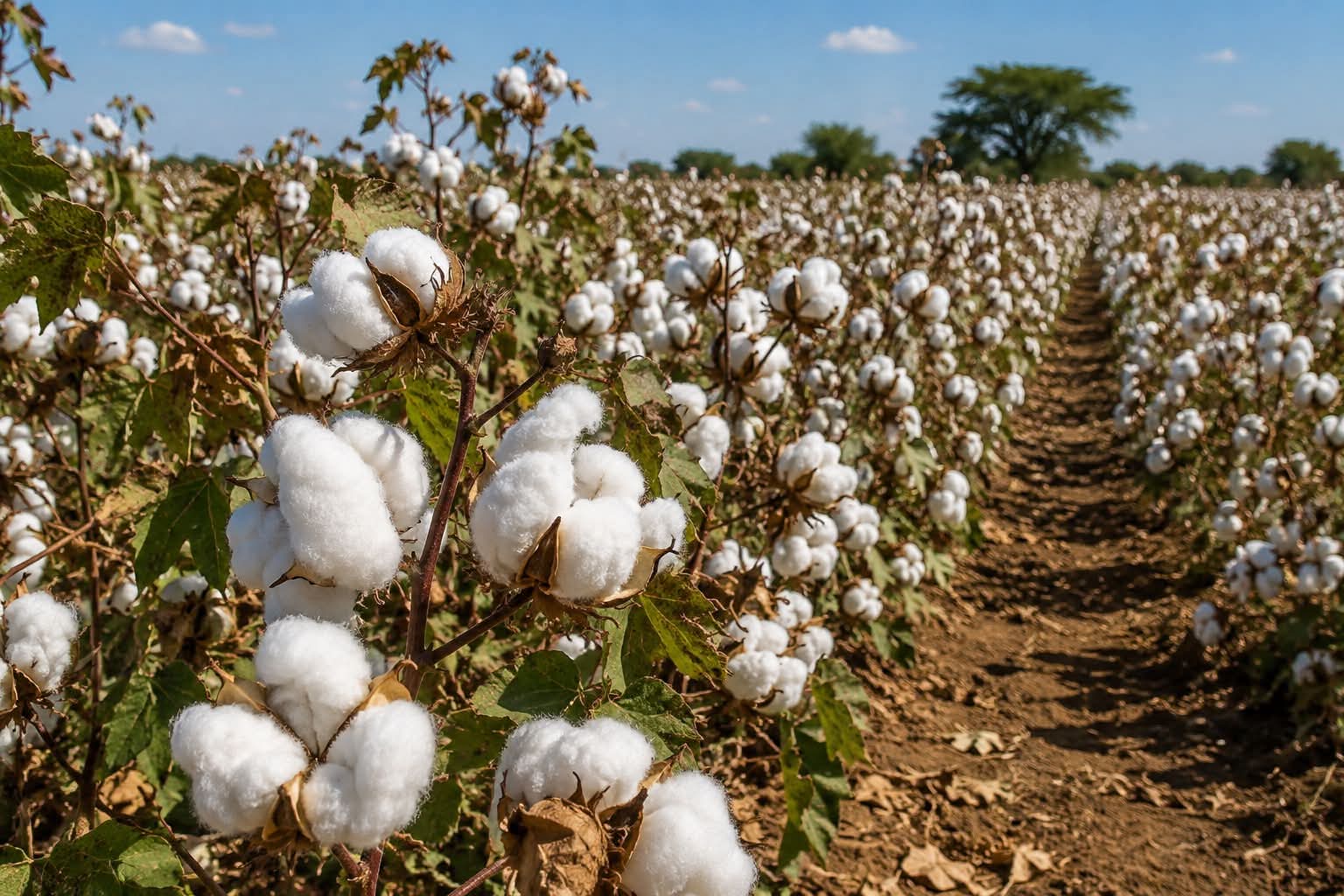
President John Dramani Mahama’s recent suggestion that Ghana may import cotton from the Republic of Benin to supply the country’s anticipated revival of the textile industry has reopened an important national conversation. While the proposal may offer a practical short-term solution to ensure a steady supply of raw materials, it also presents Ghana with an opportunity to reflect on a critical question: Should a nation that once had a thriving cotton industry now depend on imports for a crop it can produce abundantly? The answer should be a resounding no.
Cotton production is not new to Ghana. For decades, it formed the economic backbone of many communities across the then Northern, Upper East and Upper West Regions. Thousands of farmers cultivated what was popularly referred to as “white gold,” providing livelihoods for rural households while supplying raw materials to Ghana’s flourishing textile factories.
The history of cotton production in Ghana dates back to the late 1960s when the government established the Cotton Development Board to coordinate commercial cotton farming. Through government support, farmers received improved seeds, fertilisers, pesticides, extension services and guaranteed markets. Cotton production expanded rapidly throughout the northern savannah ecological zone, covering districts such as Tamale, Yendi, Savelugu, Wa, Lawra, Jirapa, Nadowli, Bolgatanga, Bawku, Navrongo, Gambaga and several others.
At its peak during the 1970s, tens of thousands of farming households depended on cotton as their principal cash crop. The crop supplied Ghana’s textile giants, including Akosombo Textiles Limited, Ghana Textile Printing Company, Juapong Textiles and Tema Textile Company. This created a complete value chain linking agriculture, manufacturing, transportation and commerce. Unfortunately, this success story did not last.
The collapse of Ghana’s cotton industry resulted from a combination of poor policy choices, falling international cotton prices, delayed payments to farmers, weak institutional management, declining government support, rising production costs and the liberalisation of the economy without adequate protection for local industries. As imported textiles flooded the Ghanaian market, domestic textile factories struggled to compete, many eventually reducing production or shutting down altogether. With the disappearance of local textile manufacturers came the collapse of demand for locally produced cotton, leaving farmers with little incentive to continue cultivation.
Today, many of the once-thriving cotton-growing communities have shifted to maize, soybean, groundnuts and other crops. Yet the natural advantages that made Northern Ghana suitable for cotton production remain unchanged.
The northern savannah still offers ideal climatic conditions, abundant sunshine, suitable soils and vast tracts of arable land. More importantly, many older farmers still possess the knowledge and experience required to cultivate cotton successfully. The infrastructure may have weakened, but the human capacity has not disappeared.
Importing cotton from Benin may satisfy immediate industrial needs, but it also means exporting employment opportunities, foreign exchange and rural incomes to another country. Every bale of cotton imported represents income that could have gone to a Ghanaian farmer. It also represents lost opportunities for transporters, agro-input suppliers, ginneries and rural businesses.
If Ghana is determined to revive its textile industry, then equal attention must be given to reviving cotton production.
The government should consider establishing a comprehensive National Cotton Revival Programme with clearly defined objectives. Such a programme should begin by reintroducing improved high-yielding cotton varieties capable of competing with those produced in neighbouring countries. Farmers should once again have access to certified seeds, fertilisers, pesticides and extension services through structured support programmes.
Equally important is the introduction of guaranteed minimum producer prices. One of the principal reasons farmers abandoned cotton in the past was uncertainty over payments. A transparent contract farming system that guarantees prompt payment upon delivery would restore confidence among producers.
Investment must also be directed towards modern ginning facilities strategically located across Northern Ghana. Processing cotton closer to production areas reduces transportation costs while creating employment opportunities within rural communities.
Mechanisation should become an integral component of the revival strategy. Access to tractors, planters and harvesting equipment would improve productivity and reduce production costs, making Ghanaian cotton more competitive.
Research institutions such as the Council for Scientific and Industrial Research (CSIR), universities and the Ministry of Food and Agriculture should collaborate in developing improved cotton varieties that are drought-resistant, pest-resistant and capable of producing higher yields under Ghanaian conditions.
The government must also ensure stronger integration between cotton producers and textile manufacturers. Rather than operating as separate industries, cotton farming and textile manufacturing should function as components of one coordinated value chain. Textile factories should be encouraged, through incentives and long-term supply agreements, to source a significant proportion of their raw cotton from local farmers.
Perhaps the most important lesson from Ghana’s previous experience is that agriculture and industry cannot be developed in isolation. Reviving textile factories while relying indefinitely on imported cotton simply transfers economic benefits to neighbouring countries. Sustainable industrialisation requires sustainable domestic agricultural production.
The Republic of Benin offers an instructive example. Through consistent government support, farmer incentives and effective extension services, Benin has become one of Africa’s leading cotton exporters. There is no compelling reason why Ghana, with comparable ecological conditions and an experienced farming population, cannot achieve similar success.
The revival of cotton production would extend far beyond supplying textile factories. It would stimulate employment, reduce poverty in Northern Ghana, create new agribusiness opportunities, generate foreign exchange through exports and contribute significantly to Ghana’s industrial transformation agenda.
President Mahama’s vision to revive Ghana’s textile industry deserves national support. However, that vision should not end at importing raw cotton. It should inspire the rebirth of an entire agricultural and industrial ecosystem that once transformed lives across Northern Ghana.
The cotton fields that once flourished in the north can flourish again. Instead of importing our future, let us cultivate it.
For Ghana’s cotton industry is not merely a story of the past—it remains one of the country’s greatest untapped opportunities for inclusive economic growth and sustainable industrial development.






No comments yet. Be the first to comment!