
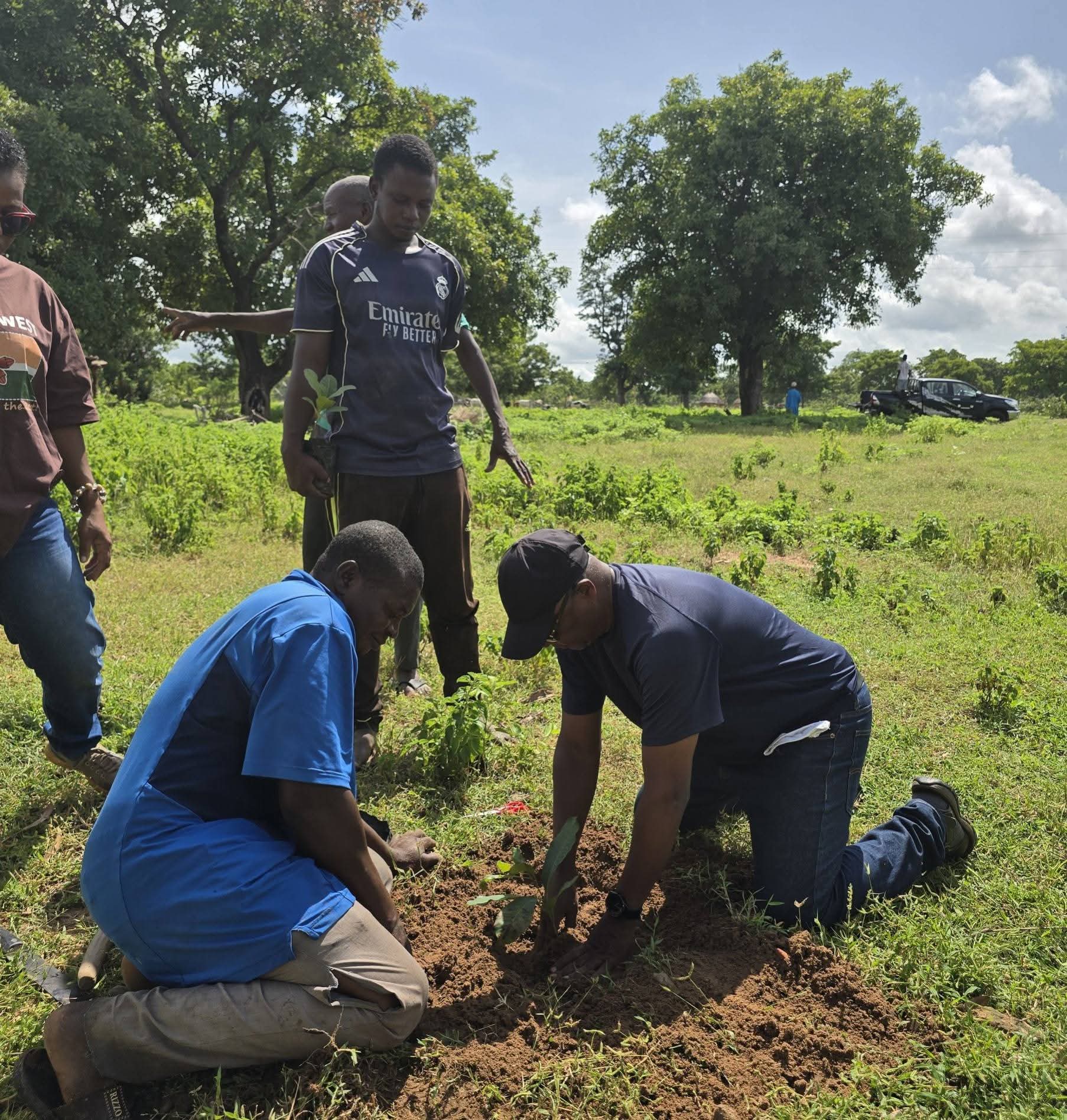
The Shea Lands of Hope initiative has officially been launched in Gbankor in the Upper West Region with the planting of 100 shea seedlings, marking the beginning of a long-term afforestation and economic empowerment programme aimed at transforming Ghana's shea industry.
The symbolic exercise, carried out in the Gbankor traditional area, represents what organisers describe as the first step in a broader campaign to establish thousands of cultivated shea trees across communities in Northern Ghana during the current rainy season.
The launch also received the active participation of the revered Chief of Gbankor, Naa Jamaa Mantara II, who joined organisers, traditional leaders and community members in planting the shea seedlings. His involvement underscored the commitment of traditional authorities to environmental conservation, sustainable land management and the long-term vision of transforming the shea sector into a major driver of economic development in Northern Ghana.
The initiative seeks to redefine the traditional perception of the shea tree as a naturally occurring wild species by promoting deliberate, science-based cultivation capable of producing higher yields, improving nut quality and ensuring a more sustainable supply for local processing and international markets.
According to the organisers, the programme marks a significant shift towards treating shea as a commercially cultivated crop with enormous economic potential rather than relying solely on naturally occurring trees scattered across the savannah landscape.
The launch was spearheaded by the Paramount Queen Mother of Sing, Wa, Pognaa Salma Chaana, who serves as the Brand Ambassador of the Shea Lands of Hope programme under the auspices of the SheaPark Resource Hub. Her leadership reflects the growing role of traditional authorities in promoting environmental stewardship, climate resilience and sustainable rural development.
Organisers say thousands of shea seedlings are expected to be planted across the Upper West Region during the current rainy season as part of efforts to restore degraded landscapes while creating sustainable livelihood opportunities for communities.
The initiative is expected to generate long-term economic benefits by increasing the availability of cultivated shea plantations, improving household incomes and strengthening women's participation in the shea value chain, where they have traditionally played a leading role in harvesting and processing shea nuts.
Beyond its economic significance, the project is also expected to contribute to climate change mitigation through large-scale tree planting, helping to restore degraded lands, conserve biodiversity and enhance environmental resilience across Northern Ghana.
Promoters of the initiative describe shea as "the cocoa of Northern Ghana," arguing that with deliberate investment, scientific cultivation and value addition, the crop has the potential to become one of the region's most valuable economic assets—one whose long-term value could surpass that of many extractive resources.
They believe the Shea Lands of Hope initiative will serve as a catalyst for repositioning Northern Ghana as a leading producer of high-quality cultivated shea while creating jobs, reducing poverty and safeguarding the environment for future generations.
The planting of the first 100 shea seedlings in Gbankor, therefore, represents more than a ceremonial launch. It marks the beginning of a bold vision to transform hope into measurable action, laying the foundation for a sustainable shea industry that will benefit men, women and children across Northern Ghana for generations to come.
The Trial News



No comments yet. Be the first to comment!