
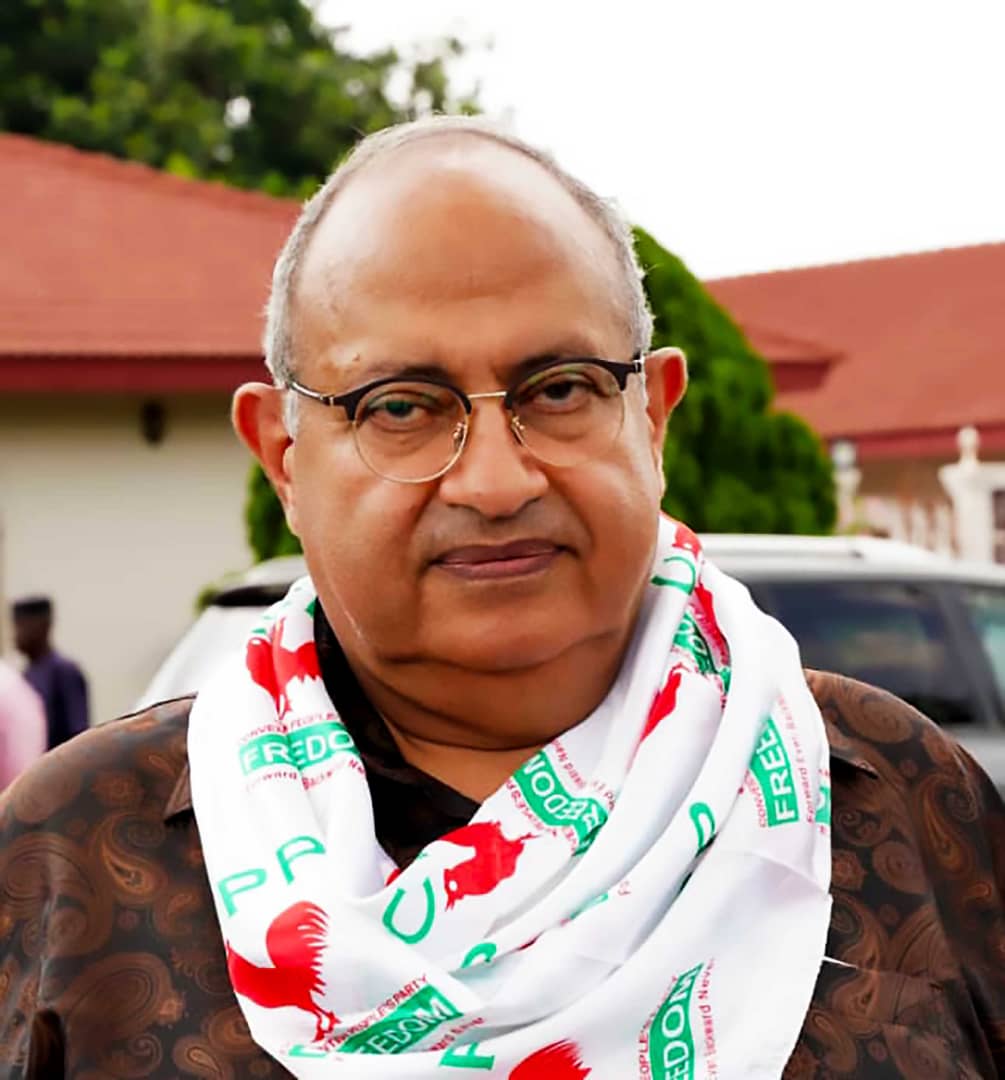
The son of Ghana’s first president warns African leaders against economic dependency and neocolonial traps disguised as development aid.
Comrade Onsy Kwame Nkrumah Jr., son of Ghana’s first President, Dr Kwame Nkrumah, has cautioned Ghanaians and African leaders not to be easily swayed by the flattering praises often offered by international financial institutions such as the World Bank and the International Monetary Fund (IMF).
His caution comes in the wake of recent reports by some news outlets quoting the World Bank as praising the Ghana cedi for being the best-performing currency over the past eight months. Comrade Nkrumah Jr. urged citizens to treat such commendations with scepticism, arguing that they often serve as subtle tools to influence public perception and economic direction in favour of foreign interests.
According to him, these institutions have their own agendas and parameters that differ sharply from what an enlightened, independent, and patriotic government—such as the Convention People's Party (CPP)—would pursue in the best national interest of Ghana and Africa.
“Please, comrades, do not mind the World Bank or the IMF, nor blindly believe everything they say,” he advised. “Always study, analyse, and treat their statements with great caution and due diligence before deciding what to believe and what to disregard.”
Comrade Nkrumah Jr. explained that his remarks are grounded in years of personal research and direct engagement with officials of these global institutions. He recalled visiting their impressive headquarters in Washington, D.C., and holding extensive discussions with their directors to better understand their long-term intentions toward Ghana and Africa.
He observed that many Ghanaian economists, though well-meaning, often become entangled in what he described as the “subtleties and traps” of these institutions. Some, he noted, are unaware or deceived, while others may even become complicit in advancing the same neocolonial agendas that keep African nations economically dependent.
“Economists who work for these duopolies may not readily question or suspect anything wrong in following their agenda,” he said. “They may fall blindly into the straitjackets designed by these institutions and fail to see the harm done to our economic sovereignty.”
Comrade Nkrumah Jr. stressed that the ideological and policy differences between the IMF–World Bank “duopoly” and the independent CPP tradition are profound. While the latter prioritises self-reliance, industrialisation, and Pan-African cooperation, the former promotes dependency through loan-driven economic models.
He further challenged African nations to reflect deeply on their long-standing reliance on these financial institutions.
“Any African country that has depended on the IMF or World Bank should ask itself why it still has to return for loans again and again,” he noted. “If those loans truly worked for development, why are we still dependent after all these years?”
While acknowledging corruption and mismanagement as serious internal problems that hinder Africa’s progress, Comrade Nkrumah Jr. maintained that a significant portion of the blame lies with the “inhumane conditionalities” imposed by these institutions—conditions that often undermine the very countries they claim to assist.
He concluded by reminding Ghanaians that most of today’s developed nations did not possess even half of the natural resources Africa is blessed with. Yet, through visionary leadership and self-determination, they rose to prosperity. Africa, he said, must do the same.
“We cannot continue to rely on foreign aid and loans,” he emphasised. “We must believe in ourselves, control our resources, and shape our destiny as free and independent nations", he admonished.
No comments yet. Be the first to comment!