
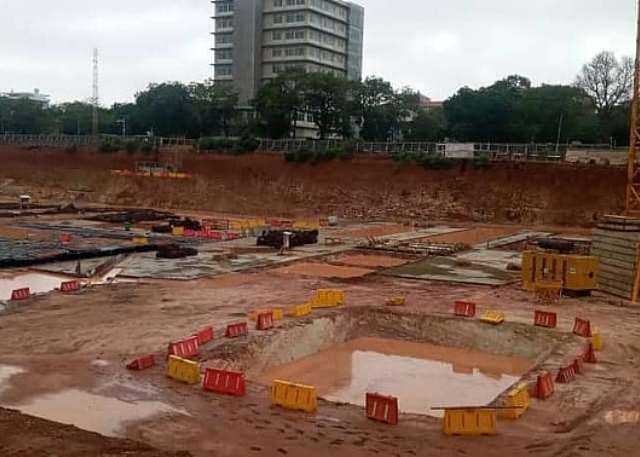
Across the nation, the Christian Council's call for the completion of the National Cathedral has reignited a debate that refuses to die. But behind the renewed agitation lies a painful truth many Ghanaians can no longer ignore: the loudest voices pushing for the cathedral are not driven by the suffering of the masses, but by the interests of a select few who stand to benefit from its existence.
In a country where unemployment has grown into a chronic national crisis, it is baffling that religious leaders would insist on the completion of a project that has already drained millions of cedis without yielding any meaningful progress. These same men and women of God often preach compassion, humility, and service to the poor—but are now championing a cause that does nothing to address the daily struggles of the very people they claim to shepherd.
One is forced to ask: Which God demands a house built in His name while His people endure hunger, unemployment, and despair?
If such a God exists, then we must find Him and ask why He appears so indifferent to the suffering of the poor—some of whom can barely afford even a single meal a day, let alone three.
Every year, countless Ghanaians lose their lives on dangerous roads riddled with potholes, erosion, and long-neglected damage. Communities walk miles for potable water, often sharing muddy streams with animals. Schools in rural areas still operate under trees, exposing children to the harshness of the sun and the uncertainty of sudden storms. Others study in cracked, collapsing classrooms that are nothing short of death traps.
These are the realities of our time. Yet, remarkably, the national conversation is being dominated by calls for a monument that adds nothing to the lives of those who bear the brunt of these hardships.
The irony is devastating. Many of the young people sitting in the pews of the very churches pushing for the cathedral are unemployed––struggling not for spiritual upliftment but for economic survival. What moral justification exists for prioritising a concrete structure over the dreams, education, and future of the youth who must one day lead this nation?
It is not just misplaced priorities; it is a grave betrayal.
A cathedral cannot heal hunger.
It cannot create jobs.
It cannot fix broken roads or provide clean water.
It cannot protect a child learning under a mango tree from the next heavy storm.
If the Christian Council believes so deeply in this project, they are welcome to fund it themselves. Let the churches that are pushing the agenda contribute and construct it—not the government, and certainly not the taxpayer who is already stretched to breaking point. Ghana cannot afford another monument of prestige when basic human needs remain unmet.
And to the NDC government, the warning is simple and clear: the people are watching. Any attempt to prioritise the cathedral over the welfare of the nation will be met with resistance. The public mood is not in favour of extravagant symbolism; it is in favour of practical solutions that uplift lives.
Ghana must choose development over vanity, people over monuments, and compassion over political convenience.
A nation that abandons its poor while building temples cannot claim to be righteous. It is time for leaders—political and religious alike—to remember that true worship is demonstrated not in buildings, but in justice, fairness, and the protection of the vulnerable.
Anything less is not just absurd—it is wickedness disguised as spirituality.
No comments yet. Be the first to comment!