
A Region on the Brink
Across Ghana’s Savannah belt, the signs of climate distress are impossible to ignore. The once-fertile lands of the north are drying up, rainfall has become erratic, and the soil is losing its vitality. For thousands of subsistence farmers who depend on the land for survival, drought and crop failure have become painful realities, breeding hunger, poverty, and despair.
While nature plays a role in this crisis, human activity remains the major driver. Chief among these destructive acts is the age-old practice of bush burning, a tradition that continues to destroy the very ecosystem that sustains life in northern Ghana.
“Bush burning is not just an environmental issue; it is a direct attack on the livelihoods and future of northern Ghana.”
Decades of Awareness, Little Change
For many years, the causes and effects of bushfires have been taught in schools across the country. The West African Examinations Council (WAEC) has even examined the topic repeatedly to raise awareness among students. Similarly, the Ministry of Agriculture and the Forestry Commission have invested heavily in education and public sensitisation.
Yet, despite all these efforts, the fires keep burning. Every dry season, smoke fills the horizon as vast areas of vegetation are set ablaze, destroying crops, wildlife habitats, and fertile topsoil. The result is a vicious cycle — land degradation, poor yields, and worsening food insecurity.
Who Fuels the Flames?
Several groups contribute to the annual devastation. Fulani herdsmen, for instance, often set fires believing that new grass will sprout faster for their cattle to graze. This practice, though widespread, has no scientific support and causes more harm than good. These herdsmen can instead be supported to prepare hay or silage to feed their animals during the dry season which is a sustainable alternative that protects both the environment and their livelihood.
Hunters, too, are major culprits. In their pursuit of bush meat, they light fires to clear bushes, often triggering uncontrollable infernos that spread across communities. Educating them on animal rearing and sustainable hunting alternatives could greatly reduce this threat.
Farmers are not innocent either. Many burn their fields to clear land or drive away snakes and other creatures, unaware that these animals are essential to the ecosystem. Snakes, for example, help control pests and maintain ecological balance. Modern land preparation methods and proper fire belt creation should replace these destructive traditions.
The Silent Victim: Shea Trees
One of the most affected natural resources is the shea tree, a vital economic asset for rural communities, especially women. Each year, bushfires destroy vast shea groves, reducing both the quality and quantity of shea nuts harvested.
This loss is alarming given the rising global demand for shea butter in the cosmetic, pharmaceutical, and food industries. Locally, with the soaring cost of other cooking oils, shea butter has become a preferred alternative for many households. The destruction of these trees threatens not only biodiversity but also women’s economic empowerment.
A Call to Action
The solution lies in strong local action. Metropolitan, municipal, and district assemblies must enact and enforce strict bylaws to curb bush burning and protect shea trees. These laws should be backed by punitive measures that deter offenders and supported by community education on sustainable land use and environmental conservation.
Environmental protection should no longer be viewed as the responsibility of government agencies alone. Traditional authorities, farmers, herdsmen, and youth groups must all be part of this effort. Ending bushfires is not just about saving trees; it’s about saving livelihoods, restoring hope, and protecting future generations.
The Path Forward
If this destructive cycle continues unchecked, the consequences will be dire — depleted soils, failed crops, deepened poverty, and mass migration. But if we act decisively now, we can reverse the trend. Protecting our environment is not a luxury; it is a survival strategy for Ghana’s northern communities.
The time to act is now — before our savannah turns into dust and our future goes up in flames.
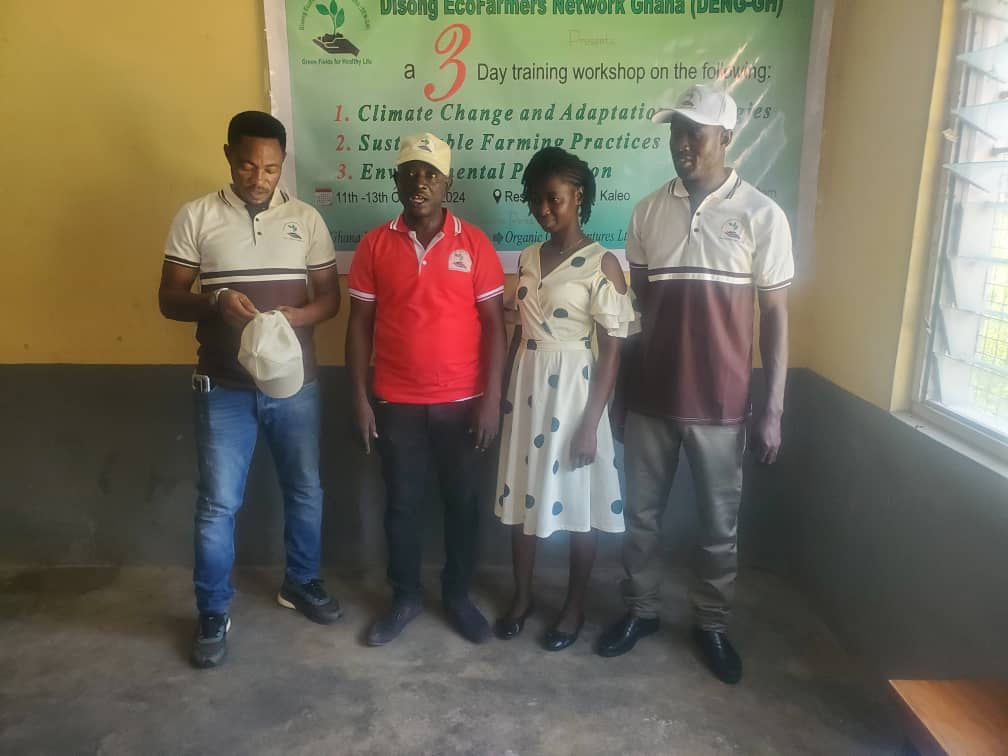
Francis Angbabora Baaladong is a writer and the Director of Disong EcoFarmers Network Ghana, a local NGO based in the Nadowli-Kaleo District. The organisation is dedicated to promoting sustainable farming, climate change adaptation, and environmental protection in the Nadowli-Kaleo District.



Ibrahim Alhassan
Nov 7, 2025 6:09 amReally it is a very disturbing issue, it causes pain to our farmers when food crops are destroyed.
Michael Ziem Kuufaar
Nov 7, 2025 12:40 pmI just can't comprehend this attitude at all. We know the consequences yet we do it. God help us
Abdul-Razak Dawdi
Nov 8, 2025 5:37 amGreat work. Indeed very soon all our shear trees will be marked as endangered species