

There are places in the Nadowli/Kaleo Constituency where darkness is not merely what descends when the sun goes down. Darkness has become a way of life.
That is the disturbing reality confronting the people of Kaabogu, Sigduori, Kontaali, Chari-Sombo and surrounding settlements, as well as Kpagdenga in the far east of the constituency, where communities have lived for decades without the basic social amenity that has become indispensable to modern life: electricity.
I recently encountered some of these communities during my visits across the constituency, and I must confess that their circumstances have left a particularly deep impression on me. The cry of these people is not new. It has travelled from government to government, administration to administration, and election to election, yet for many of them, tomorrow still looks remarkably similar to yesterday.
As I speak, they are still waiting for light. For anyone who understands the life-changing power of electricity, it is almost impossible to encounter such circumstances without feeling a clear sense of empathy. Electricity is not simply about bulbs illuminating rooms. It powers schools, health facilities, businesses, communication, refrigeration, farming, small-scale processing, security, and livelihoods. It extends productive hours and opens windows of opportunity that darkness keeps firmly shut.
So when an entire community remains without electricity for years, the deprivation is much deeper than the absence of light. It is an exclusion from opportunity. And this is precisely why the situation in these communities deserves to be trumpeted, amplified, and confronted with the urgency it deserves.
The darkness is only one part of the story, while the plight of these communities is compounded by deplorable road conditions as well. Some roads desperately require bridges and culverts; others have deteriorated to the point where describing them as roads becomes an act of generosity. For farmers, petty traders, students, pregnant women, patients, and ordinary commuters, travelling through these routes can become an ordeal rather than a routine journey.
I have personally encountered some of these challenges. Four years ago, during the last campaign season, I was travelling towards Nyinbali and was confronted with the frightening reality of crossing the river from Samatigu. It was not an academic observation. It was a firsthand encounter with danger.
I communicated the concern on the spot to the then-sitting Member of Parliament because I felt that my voice, however modest, had to count for the people who were routinely exposed to that risk. Today, thankfully, the Samatigu–Nyinbali bridge is under construction. It may appear to have stalled, and there may be technical, financial, or administrative explanations for the delay.
Frankly, those considerations are secondary to me. What matters is that the bridge is completed. I care little about who is financing it, who is constructing it, or who is supervising it. I care about a bridge that finally allows people to cross safely and allows economic activity to move freely. This will make the economic dividends not abstract.
The people of these communities are predominantly farmers and petty traders. They depend heavily on access to markets, and the Sankana market remains strategically important to their economic lives on market days. A functional bridge is therefore not simply a piece of concrete and steel. It is a connection between communities, farms, traders, markets, and livelihoods.
The roads we cannot continue to ignore: we must do thorough introspection on what we stand for in our communities. But while the bridge between Samatigu and Nyinbali is being addressed, other dangerous corridors remain. The Kaahaa–Ombo road continues to cry for attention. So does the Korinyiri–Naro route.
I have seen and experienced these roads. I have listened to commuters complain about them. I have watched the frustration of people whose economic activities depend on roads that seem to have been forgotten. These are not complaints manufactured for political convenience. They are lived realities. And if public office is ultimately about improving the conditions under which people live, then these realities must occupy a central place in our development conversations.
Then comes the darkness because I am passionate about it. In all of these challenges, the one that troubles me most is the absence of electricity in the communities I have mentioned. The thought of people continuing to live in perpetual darkness in this age gives me what I can only describe as a continuum of rippling shivers down my body.
How can a child study effectively at night without dependable electricity? How does a small business grow when productive hours are constrained by darkness? How does a community attract investment when basic power infrastructure remains absent? How do we expect young people to acquire the skills demanded by the modern economy when some of their communities remain deprived of the most basic infrastructure that makes modern learning and enterprise possible?
These questions are not partisan. They are human. They should trouble every person who has any connection to these communities. A pledge offers a sense of hope and stability, and it seems that the residents of these settlements are holding onto this promise as a source of comfort and support. There is, however, a reason for restrained optimism.
During the President's recent tour of the district to assess progress on the 24-Hour Market, one of the major bridges serving the affected enclave was petitioned for attention, and a commitment was made to bring it under the Big Push road construction programme. That commitment must not end as another reassuring political promise. It must translate into work on the ground. The people are watching, and they have every right to watch.
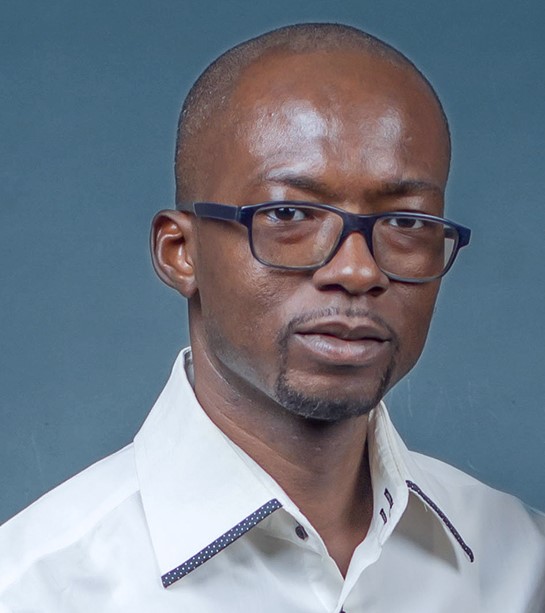
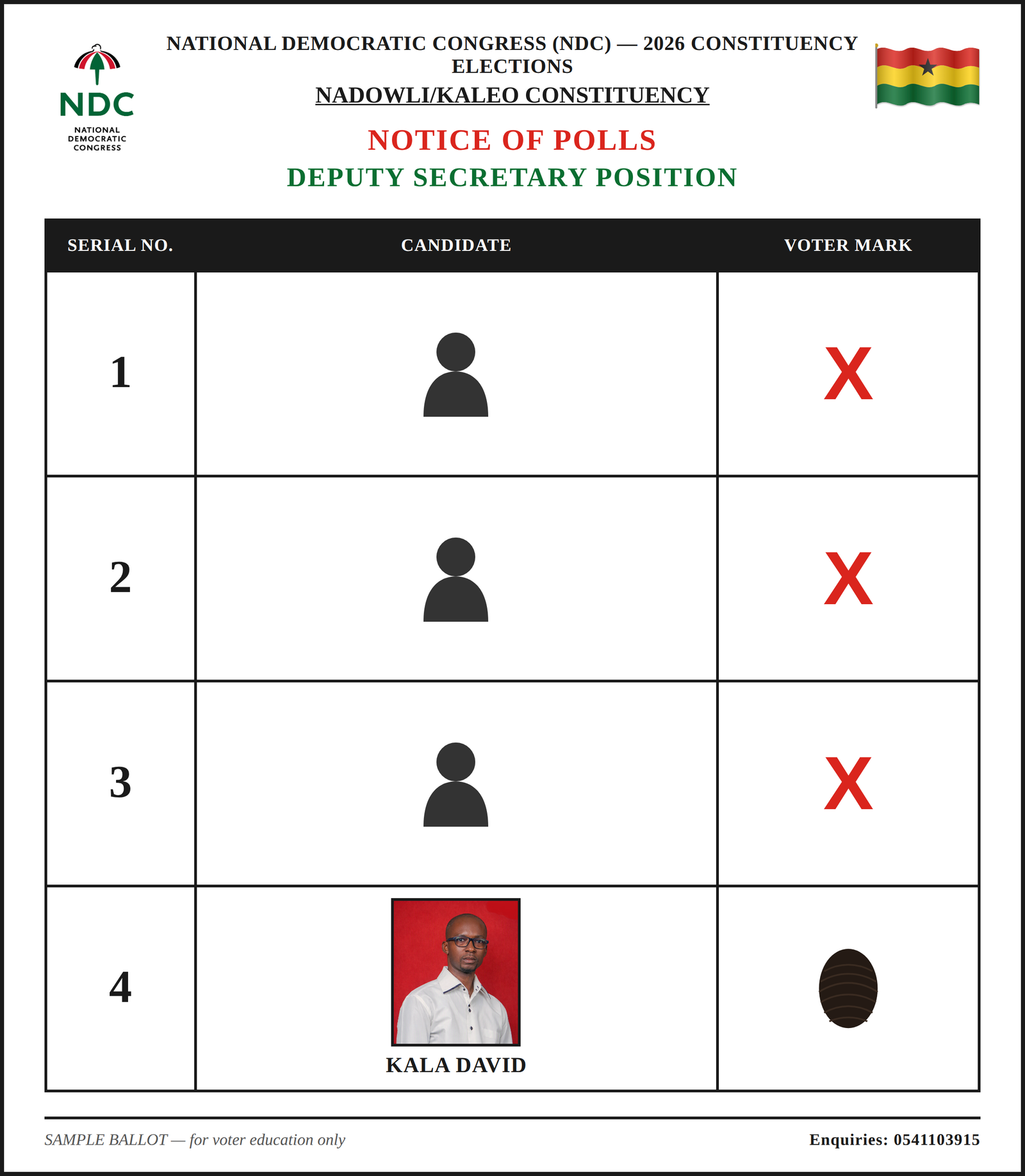
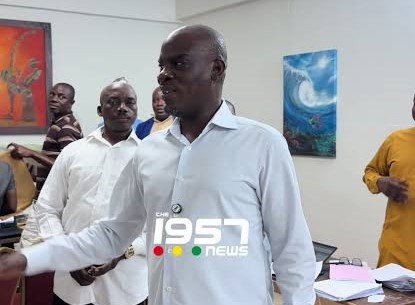
As I continue my visits across the constituency in my bid to serve as Deputy Secretary of the NDC in Nadowli/Kaleo, I am determined to visit as many communities as possible and listen to the people themselves. My fervent hope is that, as I move from community to community, I will not encounter another community living without electricity. We have to concur that hope alone is not enough.
In all respects, it is a responsibility for all of us. This is therefore not a message directed only at government. I am making a passionate appeal to the Assembly Members, the District Assembly, led by the indefatigable DCE, traditional leaders, opinion leaders, development advocates and, particularly, illustrious sons and daughters of these communities who live outside the constituency.
Let us take a second look at how our people back home are living. Let us ask ourselves whether we would accept the same conditions if our own immediate families were living there. Let us not wait for government alone. Where government must act, let us demand that it acts. Where the Assembly can intervene, let it intervene. Where communities can mobilise, let them mobilise. Where individuals and old students' groups, hometown associations, philanthropists, and development-minded citizens can contribute, let them do so.
Development should not always wait for the next budget statement. Sometimes, it begins when people who have the means decide that the suffering of their own people can no longer be normalised. A typical case is Takpo with neighbouring settlements. It is one such watchful environment where they are shouldering their own affairs and not waiting on government.
My voice is my contribution. I make no pretence that one person's voice can solve all these problems. But my voice is what I have, and I intend to use it proudly. When I encounter a dangerous road, I will speak. When I see a bridge that needs to be built, I will speak. When I encounter a community that has been left in darkness for decades, I will speak even louder. And when I see a development project that can transform livelihoods, I will support its completion regardless of who initiated it.
Because development should never become the property of a political party. A bridge belongs to the people. A road belongs to the people. Electricity belongs to the people. Development belongs to the people. The people of Korinyiri, Kaabogu, Sigduori, Kontaali, Chari-Sombo, Kpagdenga and the surrounding communities have waited long enough.
They do not need pity alone. They need action. They need roads that can be travelled. They need bridges that can be crossed. They need markets that can be reached. They need opportunities that can be seized. But above all, they need light. And from whichever perspective one chooses to look at it — economic, educational, social, security, health, or simply human dignity — they deserve to have it. Let the darkness that has defined these communities for decades finally give way to a brighter tomorrow.
They need light. And we must help them find it.
Some may not appreciate my approach, but I stand firm in my authenticity without any hidden agenda. True progress is born from sincere intentions rather than political maneuvering. If my journey leads to benefits, I embrace it, for we must all understand the consequences of our actions and inactions.
Politics often intertwines with challenges reminiscent of a mafia-like environment, and I am fully aware of what lies ahead. Regardless of success, I have gained invaluable knowledge and wisdom from the delegates I engage with during my campaigns. I have always been a better person today than tomorrow in all my life.
As I left Chari-Sombo after 8 PM, the retired Chairman shared a profound lesson: a young man who sees himself as a true archer does not withdraw an arrow once it is drawn from the quiver with the aim to shoot.

No comments yet. Be the first to comment!