
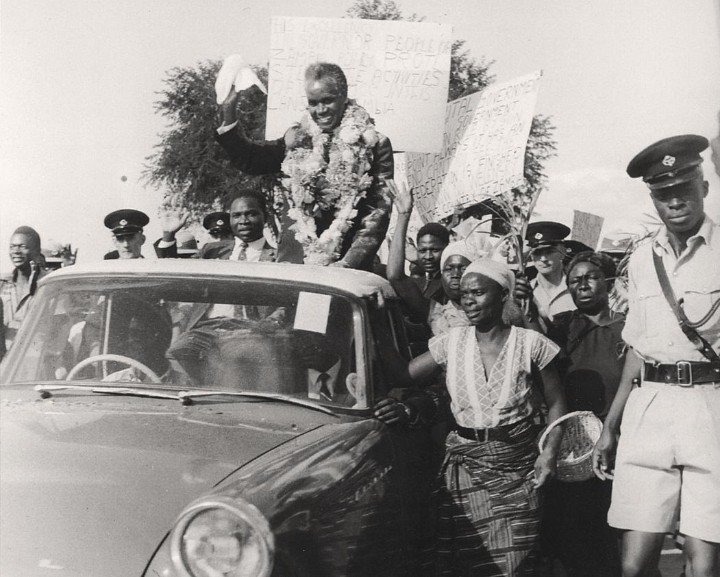
Few African leaders of the independence generation embodied the spirit of African liberation as profoundly as Dr. Kenneth David Kaunda, the founding President of Zambia and one of the continent's most prominent Pan-African statesmen.
Born on 28 April 1924 in Chinsali, in what was then Northern Rhodesia, Kaunda began his career as a teacher before entering nationalist politics. His involvement in the struggle against British colonial rule eventually propelled him to the centre of Zambia's independence movement.
On 24 October 1964, Northern Rhodesia became the independent Republic of Zambia, with Kaunda as its first President. He remained in office for 27 years, until his defeat in the country's first multiparty elections in 1991.
Kaunda inherited a young country whose economy depended heavily on copper mining and whose population comprised numerous ethnic and linguistic communities. His famous philosophy of "One Zambia, One Nation" sought to foster national unity and prevent ethnic divisions from weakening the new republic.
His political philosophy, known as Zambian Humanism, emphasised human dignity, communal responsibility and social solidarity. Yet his presidency also had significant contradictions. Zambia eventually became a one-party state under UNIP, political freedoms were restricted, and the country experienced severe economic difficulties, particularly as copper prices declined and external debt increased.
These complexities are essential to understanding Kaunda's record. His significance, however, extends beyond his domestic presidency.
As a champion of Southern African Liberation, Kaunda viewed Zambia's independence as part of a broader African struggle. In 1964, much of Southern Africa remained under colonial or minority rule: Rhodesia was governed by a white minority, Namibia remained under South African control, and apartheid dominated South Africa.
Zambia consequently became an important centre for liberation movements in the region. Lusaka hosted organisations including the African National Congress (ANC) and SWAPO, while Kaunda's government provided political support and sanctuary to movements fighting colonialism and apartheid.
This support came at a cost. Zambia's position exposed it to economic and military pressure from neighbouring white-minority regimes. Kaunda nevertheless maintained that Zambia's independence could not be considered complete while other Africans remained under colonial or racial minority rule.
Kaunda's Pan-African Vision belonged to a generation of African leaders who saw national independence as part of a larger continental project. Alongside figures such as Kwame Nkrumah of Ghana, Julius Nyerere of Tanzania and Jomo Kenyatta of Kenya, he advocated African solidarity and liberation.
He served twice as chairman of the Organisation of African Unity (OAU), the forerunner of today's African Union. His Pan-African outlook was particularly evident in his commitment to the liberation struggles of Southern Africa, where Zambia became an important diplomatic and logistical centre.
The Man Behind the White Handkerchief: For generations of Africans, Kaunda's image is inseparable from his trademark white handkerchief, which he frequently waved during speeches and public appearances. Yet behind that familiar image was a leader who experienced imprisonment, political struggle, international pressure and the difficult task of governing a newly independent state.
His Christian faith and advocacy of reconciliation also shaped his public life. Later, he devoted considerable attention to humanitarian causes, including HIV/AIDS awareness following the death of his son, Colonel Panji Kaunda, from the disease.
The end of his era was gritted after nearly three decades in power, economic difficulties and growing demands for political reform placed increasing pressure on Kaunda's government. Multiparty politics was restored, and in the 1991 elections, Kaunda was defeated by Frederick Chiluba.
His departure marked the end of one of the longest presidencies of Africa's first independence generation. Kaunda nevertheless remained active in public and humanitarian affairs for many years. He died on 17 June 2021, aged 97.
Kaunda's legacy, like that of many leaders of Africa's independence generation, contains both achievements and controversies. His government has been criticised for political restrictions and economic difficulties, while his supporters and many historians have highlighted his role in nation-building and the liberation of Southern Africa.
What remains particularly significant is his belief that African independence was a collective undertaking. For Kaunda, Zambia's freedom was inseparable from the liberation of Zimbabwe, Namibia and South Africa. That conviction places him firmly within the history of Africa's decolonisation.
Today, generations born after independence may take political freedom for granted. Kaunda's story offers a reminder that independence was neither automatic nor inexpensive. It was pursued by men and women who challenged colonial rule, endured imprisonment and accepted considerable risks in the pursuit of self-determination.
The white handkerchief has long been folded away. But the Pan-African ideal associated with Kenneth Kaunda remains part of Africa's unfinished historical conversation.part of Africa's unfinished historical conversation.part of Africa's unfinished historical conversation.part of Africa's unfinished historical conversation.part of Africa's unfinished historical conversation.part of Africa's unfinished historical conversation.


No comments yet. Be the first to comment!