
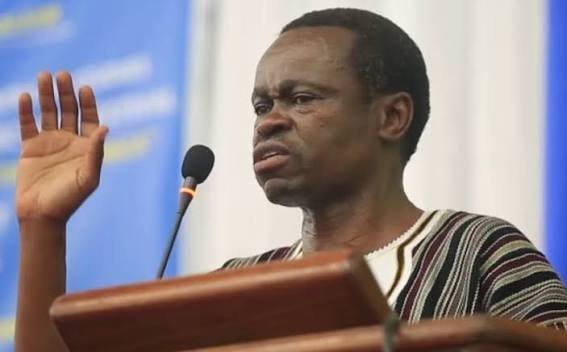
Reflections inspired by Prof. P.L.O. Lumumba's lecture on Africa's historical influence
There is perhaps no more enduring irony in human history than the fact that the continent from which humanity emerged has, for centuries, been persuaded to question its own worth.
Africa has often been presented through the vocabulary of deprivation: poor, backward, underdeveloped, unstable and dependent. Yet beneath these contemporary descriptions lies a much older and more consequential history — a history in which Africa was not purely a participant in civilisation but was fundamental to its earliest development.
This is one of the central intellectual challenges raised by Prof. P.L.O. Lumumba: What happens to a people when they lose ownership of their history? The question is not merely historical. It is political, cultural, economic and psychological.
For if a people are persuaded that their history began when somebody else arrived to discover them, then they may eventually begin to believe that their civilisation must also come from somewhere else. And that is where the struggle for Africa's future begins.
Africa before the European encounter
Africa's historical significance cannot reasonably be reduced to the period of European exploration, slavery and colonialism. Long before European colonial powers partitioned the continent, Africa had produced complex societies, systems of governance, commercial networks, intellectual traditions, technologies, and monumental architecture.
Ancient Egypt remains perhaps the most internationally recognised example, but it is far from the only evidence of sophisticated African civilisation. Across the continent existed kingdoms, empires, and communities whose achievements demonstrate that African societies developed institutions and systems appropriate to their own environments and historical circumstances.
The history of Africa therefore cannot properly be told as a story beginning with European arrival. Indeed, the broader scientific understanding of human origins places Africa at the centre of the story of humanity itself. The continent contains some of the most important archaeological evidence concerning early human evolution. Africa was not waiting for Europe to give it a history. It already had one.
The tragedy of historical amnesia
Yet the problem is not simply that African history was interrupted by slavery and colonialism. The deeper problem is that colonialism also affected the way Africans were encouraged to understand themselves. Colonial domination was not confined to the seizure of territory. It involved education, language, religion, administration, culture, and the production of knowledge. The colonial subject was frequently taught to look outward for validation.
European languages became languages of administration and prestige. European historical narratives became dominant in formal education. European institutions became models against which African institutions were judged.
The result was a peculiar contradiction: political independence could be achieved while aspects of intellectual dependence remained. The colonial flag could disappear from the flagpole while colonial assumptions remained in the classroom. The colonial administrator could leave while the colonial mentality continued to influence how the colonised regarded themselves. This is why decolonisation cannot be understood merely as the lowering of one flag and the raising of another.
The colonial map and the fragmentation of Africa
Perhaps nowhere is the unfinished character of decolonisation more visible than in Africa's political geography. The continent inherited borders largely shaped during the colonial period. Communities with historical, cultural and linguistic connections were often separated by political boundaries, while different communities were incorporated into the same colonial territories. The consequences remain visible.
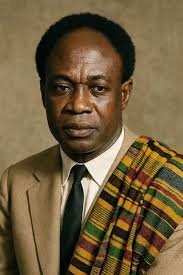
Africa is a continent of extraordinary cultural diversity, but diversity need not produce permanent political fragmentation. This was one of the great intellectual contributions of Kwame Nkrumah. Nkrumah understood that the political independence of individual African states could remain vulnerable if the continent failed to develop mechanisms for collective action.
His famous appeal for African unity was therefore not simply romantic Pan-African rhetoric. It was also a strategic argument about sovereignty, economic power and international influence. A continent possessing enormous natural resources but negotiating separately with much larger external powers inevitably faces a different balance of power from a continent capable of coordinated action.
The question, therefore, is not whether African countries should abandon their individual identities. It is whether African states can preserve their national identities while simultaneously building institutions capable of advancing common continental interests.
From political independence to intellectual independence
The greatest challenge may therefore be neither geographical nor constitutional. It may be intellectual. Political independence asks: Who governs us? Intellectual independence asks: Who defines us? Economic independence asks: Who controls the resources upon which our prosperity depends? And cultural independence asks: Whose values determine what we consider worthy, modern or civilised?
These questions are interconnected. A country may possess a national flag, a parliament, and a president and yet remain heavily dependent on external financing, external technology, external markets, and external intellectual frameworks. That does not mean that international cooperation is inherently undesirable. No modern country exists in complete isolation.
The issue is the capacity to negotiate relationships from a position of agency rather than permanent dependency. Africa must therefore move beyond the psychology of perpetual assistance.
The paradox of African resources
There is another historical contradiction that deserves attention. Africa possesses extraordinary quantities of natural resources — minerals, hydrocarbons, agricultural land, forests, and other resources essential to modern industry. Yet resource abundance has not automatically produced broad-based prosperity.
The explanation is complex. It involves governance, institutions, commodity markets, infrastructure, investment, technology, taxation, international trade arrangements, and the distribution of economic power. But the historical pattern cannot be ignored. For centuries, African resources have been extracted and incorporated into economic systems whose greatest value has often been realised elsewhere.
This raises a fundamental question: What is the purpose of possessing resources if the people who own them remain unable to capture sufficient value from them? The answer cannot simply be to stop international trade. Africa needs trade. Africa needs investment. Africa needs technology. Africa needs international partnerships.
But partnership must increasingly mean value creation within Africa rather than the continued export of raw materials with the importation of expensive finished products. The continent must progressively move up the value chain. The mineral should not merely leave the ground. The question is what happens to it after it leaves the ground.
The diner, the servant or the food?
One of the most striking ideas associated with Lumumba's argument is the metaphor of the dining table. At the table of global civilisation, who is Africa? Is Africa the diner? Is Africa the servant? Or is Africa the food? The metaphor is uncomfortable precisely because it captures a longstanding concern about Africa's position in the international economic order.
For generations, Africa has supplied labour and resources to global economic systems while too often receiving insufficient value from the transformation of those resources. The challenge, therefore, is not to withdraw from the table. It is to sit at the table as an equal participant.
That requires knowledge. It requires capital. It requires technological capacity. It requires strong institutions. It requires accountable leadership. And, perhaps most importantly, it requires Africans to believe that they have the right to shape the terms upon which their participation occurs.
The African diaspora and the unfinished African project
The African story is not confined to the geographical boundaries of the continent. Millions of people of African descent live across the Caribbean, the Americas, Europe and elsewhere. The African diaspora represents one of the consequences of the continent's tragic history of enslavement and forced migration. But it can also become a source of intellectual, cultural and economic strength.
The relationship between Africa and its diaspora therefore deserves to be approached strategically. The diaspora possesses expertise, capital, technological knowledge and international networks. Africa possesses enormous human and material resources of its own. The challenge is to create meaningful relationships that go beyond occasional cultural celebrations. The African renaissance must be both continental and global.
The responsibility of Africans
But there is a danger in attributing every contemporary African problem to colonialism. Colonialism explains much. It does not explain everything. Contemporary Africans also have responsibilities.
Corruption cannot always be blamed on colonialism. Poor governance cannot always be blamed on colonial borders. Institutional weakness cannot always be blamed on foreign powers. African leaders and citizens must confront their own failures with the same intellectual honesty with which they examine the failures of external actors.
A genuinely liberated Africa must therefore be capable of criticising both external exploitation and internal misconduct. The liberation of the continent cannot mean replacing one form of domination with another. It must mean creating societies governed by institutions, accountability, justice, competence, and respect for human dignity.
The African youth and the future
The ultimate beneficiaries — or victims — of Africa's unfinished transformation will be its young people. Africa has one of the world's youngest populations. This presents both an enormous opportunity and an enormous responsibility. The African youth cannot inherit merely the grievances of previous generations. They must inherit institutions capable of converting Africa's demographic strength into productive capacity.
Education therefore becomes central. But education must go beyond examination certificates. It must produce scientists, engineers, entrepreneurs, historians, philosophers, teachers, administrators, artists and innovators who can solve African problems while contributing to global knowledge. Africa must not merely consume knowledge produced elsewhere. It must produce knowledge, and that may be the most profound form of decolonisation.
Remembering Nkrumah
Kwame Nkrumah understood something that remains relevant decades after Ghana's independence. The political independence of Ghana was important, but he understood that Ghana's destiny was inseparable from the destiny of Africa. His famous assertion that Ghana's independence was meaningless unless it was linked to the total liberation of Africa expressed a profound Pan-African principle.
The idea was not that Ghana should cease to be Ghana. It was that Ghana's freedom could not be completely secure in an Africa that remained politically and economically fragmented.
The same argument can be extended into the twenty-first century. An African country may achieve impressive individual progress, but continental cooperation remains essential in areas such as trade, infrastructure, security, technology, health, education and climate resilience.
The African Continental Free Trade Area represents one contemporary institutional expression of that broader aspiration, although its ultimate effects depend upon implementation, infrastructure, industrial capacity and the policies of participating states.
From the cradle to the future
Africa's greatest historical achievement may be that humanity began here. But Africa cannot live permanently on the glory of antiquity. Being the cradle of civilisation is not itself a development strategy. The pyramids cannot feed the hungry. Ancient kingdoms cannot build modern laboratories. And historical pride cannot substitute for functioning institutions.
The purpose of recovering African history is therefore not to romanticise the past. It is to recover confidence sufficiently to build the future. Africa must know where it came from without becoming imprisoned by where it came from. The continent must remember its ancient achievements while confronting its contemporary failures.
It must acknowledge the wounds inflicted by slavery and colonialism while refusing to surrender responsibility for the future. And it must engage the world—not as a supplicant, not as a permanent recipient of charity, and not as a warehouse of raw materials—but as a partner capable of producing, negotiating, and innovating.
The unfinished journey
The great lesson from Lumumba's historical argument is ultimately about agency. Africa must cease to regard itself merely as an object upon which history happens. It must become a subject of history. The continent that gave humanity some of its earliest chapters cannot afford to become a spectator in the writing of its later ones.
The task before Africa is therefore neither to reject the world nor to imitate it blindly. It is to participate in the world on terms that protect African interests while contributing meaningfully to global civilisation. The journey from the cradle of civilisation to the centre of contemporary human development is unfinished.
And perhaps the most important question is no longer: “What did Africa give the world?” That question belongs to history. The more urgent question is: “What will Africa choose to give the future?” That answer will not be written by Europe, America, Asia, or any other external power. It will ultimately be written by Africans themselves.







No comments yet. Be the first to comment!