
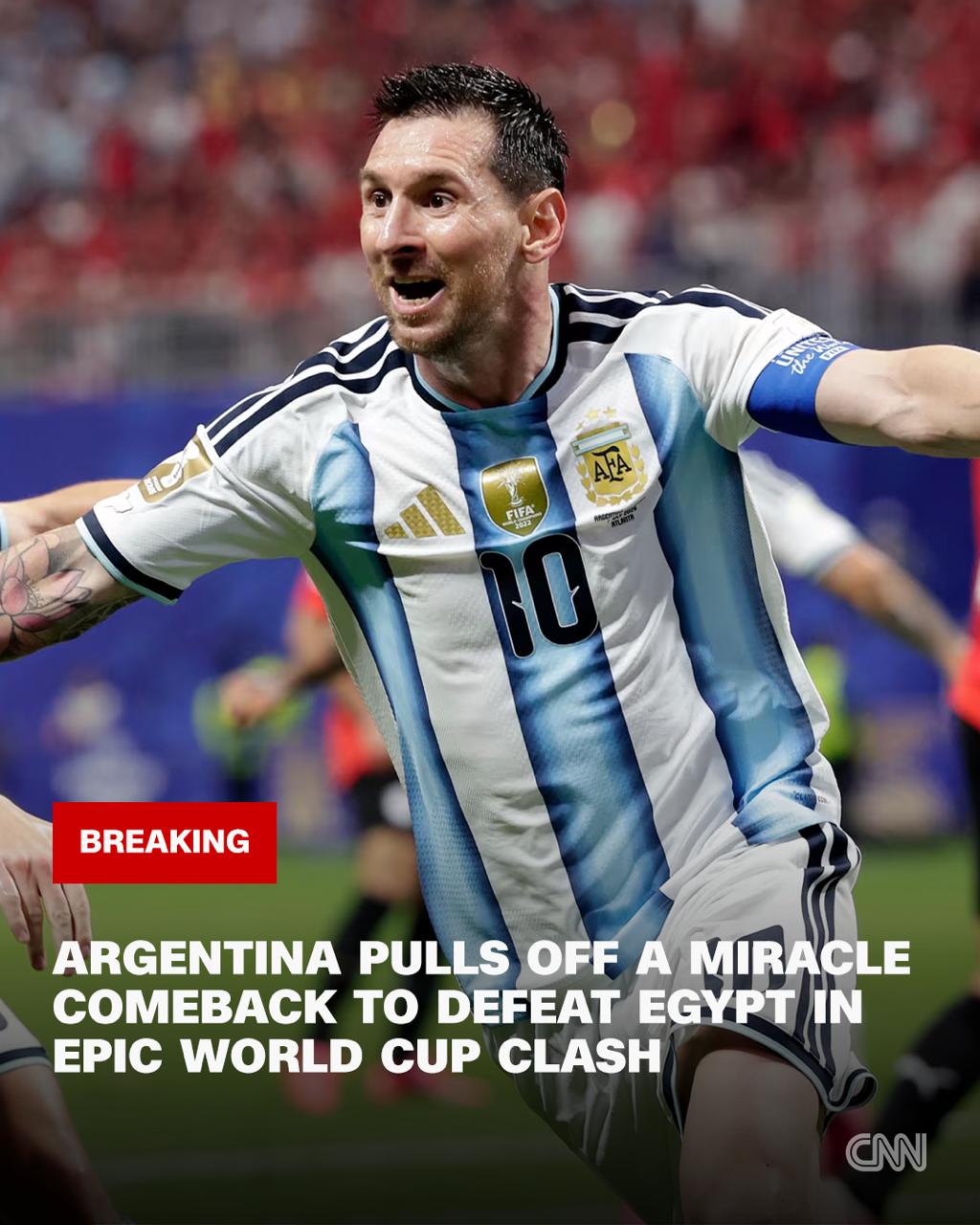
Football is often described as the world's universal language, a game that unites people across continents regardless of race, nationality, religion, or political ideology. Yet, for many Africans, recent events surrounding international football have once again raised an uncomfortable question: Is the global game truly played on a level playing field?
Many Africans increasingly feel that when crucial decisions are made, the interests of powerful nations often receive greater consideration than those of African countries. Whether this perception is entirely accurate or not, it is a sentiment that continues to grow, and recent events have only strengthened it.
The controversy surrounding the reported denial of a visa to a Somali referee for a FIFA tournament left many Africans disappointed. Regardless of immigration policies, many expected FIFA to demonstrate stronger leadership in ensuring that officially appointed match officials could participate in a competition under its authority. Instead, the response was viewed by many as inadequate, leaving the impression that if the affected official had come from a more influential football nation, the matter might have received greater urgency.
A similar feeling arose when Ghanaian footballer Thomas Partey was reportedly denied entry into Canada while legal proceedings involving him were still ongoing elsewhere. Many Africans questioned whether the principle that every individual is presumed innocent until proven guilty was applied consistently. Again, FIFA's silence fuelled perceptions that African players do not always receive the same institutional support afforded to others.
Beyond administrative decisions, officiating during some World Cup matches has also generated heated debate across Africa. Many supporters remain convinced that Senegal suffered from questionable officiating in its match against Belgium, while the Egypt-Argentina encounter reignited concerns about consistency in refereeing decisions involving African teams.
Football will always produce controversial moments. Referees are human and mistakes are inevitable. However, when controversial decisions appear to affect African teams repeatedly, suspicion naturally grows. Even if those decisions are not motivated by bias, the perception of unfairness is itself damaging to the credibility of the sport.
For decades, Africa has contributed immensely to world football. African players have become superstars in Europe's biggest leagues. African coaches, referees, administrators, and supporters have enriched the global game. The continent provides some of the world's most passionate football audiences and millions of dollars in commercial value. Yet many Africans still believe their continent is treated more as a participant than as an equal partner in shaping the future of international football.
Perhaps it is time for Africa to think boldly. Rather than constantly seeking validation from institutions perceived by many as favouring traditional football powers, Africa should begin serious discussions about establishing an African World Cup—a tournament organised, financed, and managed entirely by Africans, for Africans.
This would not be intended to replace the FIFA World Cup, nor should it be seen as an act of isolation. Instead, it would be a powerful statement of confidence in Africa's ability to organise world-class sporting events under its own principles and values.
Africa possesses the infrastructure, the footballing talent, the fan base, and the organisational capacity to host a tournament that captures global attention. The success of competitions such as the Africa Cup of Nations has already demonstrated the continent's ability to stage major football events.
More importantly, an African World Cup would represent something far greater than football. It would symbolise self-belief, unity, economic cooperation, and cultural pride.
History teaches us that Africa possessed sophisticated systems of governance, commerce, education, science, and cultural preservation long before European colonisation. Civilisation did not begin with the invention of writing. Long before written records became widespread, African societies preserved history through oral traditions, storytelling, music, symbols, customs, and community memory. Knowledge was transmitted from one generation to another with remarkable accuracy.
The notion that Africa had no civilisation until Europeans arrived has long been discredited by historians. Yet remnants of that colonial mindset continue to influence how many Africans perceive themselves and how they believe the world perceives them.
The vision of leaders such as was not built on hatred of other nations but on African dignity, unity, and self-determination. Nkrumah believed that Africa could only command genuine respect when it developed the confidence to shape its own destiny rather than depending excessively on external approval.
Today, that message remains relevant. Africa certainly needs partnerships with Europe, America, Asia, and the rest of the world. Trade, diplomacy, education, technology, and sporting cooperation benefit everyone. However, partnership should never mean dependence, nor should cooperation become control.
No nation should dictate another's cultural values, social institutions, or traditions. Every society has the sovereign right to debate and determine its own path while respecting the dignity and rights of all people.
Africa's greatest obstacle has often not been external influence alone but internal weakness. Corruption, poor governance, division, and selfish leadership have frequently undermined the continent's enormous potential. At the same time, Africans have also witnessed leaders who pursued more independent visions for their countries, reminding the continent that alternative paths are possible.
The future of African football—and indeed Africa itself—will not be determined solely by decisions made in Zurich, Washington, Ottawa, London, or Paris. It will be determined by Africans who choose to believe that the continent is capable of creating institutions that command global respect.
If Africa truly believes it deserves equality, then it must also be prepared to build platforms that reflect that equality.
Perhaps the time has come to stop merely asking for a fair place at someone else's table and instead build a table where Africa sets the standards, writes the rules, celebrates its excellence, and proves to the world that confidence, competence, and unity are the continent's greatest strengths.
The dream of an African World Cup may sound ambitious today. But every great achievement begins with a bold idea—and Africa has never lacked bold ideas. What it now needs is the collective courage to make them a reality.
The Trial News

No comments yet. Be the first to comment!